
Find the help you need for any problem
- Debt basics
- Personal loans
- Rates, fees & APR
- Credit score & eligibility
- Repayment & loan payments
- Loan application
- Debt consolidation
- All articles
Secured vs Unsecured Loans: Key Differences, Pros, Cons, and How to Choose

You need money for something important — a home repair, a large purchase, or getting out from under credit card debt. But you’re not sure whether to risk an asset or pay higher interest. Personal loans come in two main types: secured and unsecured. A secured loan uses something you own — a car, a house, or savings — as collateral. If you stop paying, the lender can take that asset. An unsecured loan requires no collateral.
Approval depends on your credit and income alone. Each type has different costs, risks, approval requirements, and best use cases. Choosing wrong could cost you thousands or put your property on the line. This article helps you compare both options side by side so you can decide which path makes sense for your situation.
In this article:
- Secured vs unsecured loans: quick comparison
- What is a secured personal loan?
- What is an unsecured personal loan?
- Key differences
- Pros and cons of secured loans
- Pros and cons of unsecured loans
- Real-life examples
- Which loan is easier to get?
- Which loan is cheaper?
- When a secured loan makes more sense
- When an unsecured loan makes more sense
- Risks to consider before choosing
- Where Pennie Financial fits
- Frequently Asked Questions
Secured vs unsecured loans: quick comparison
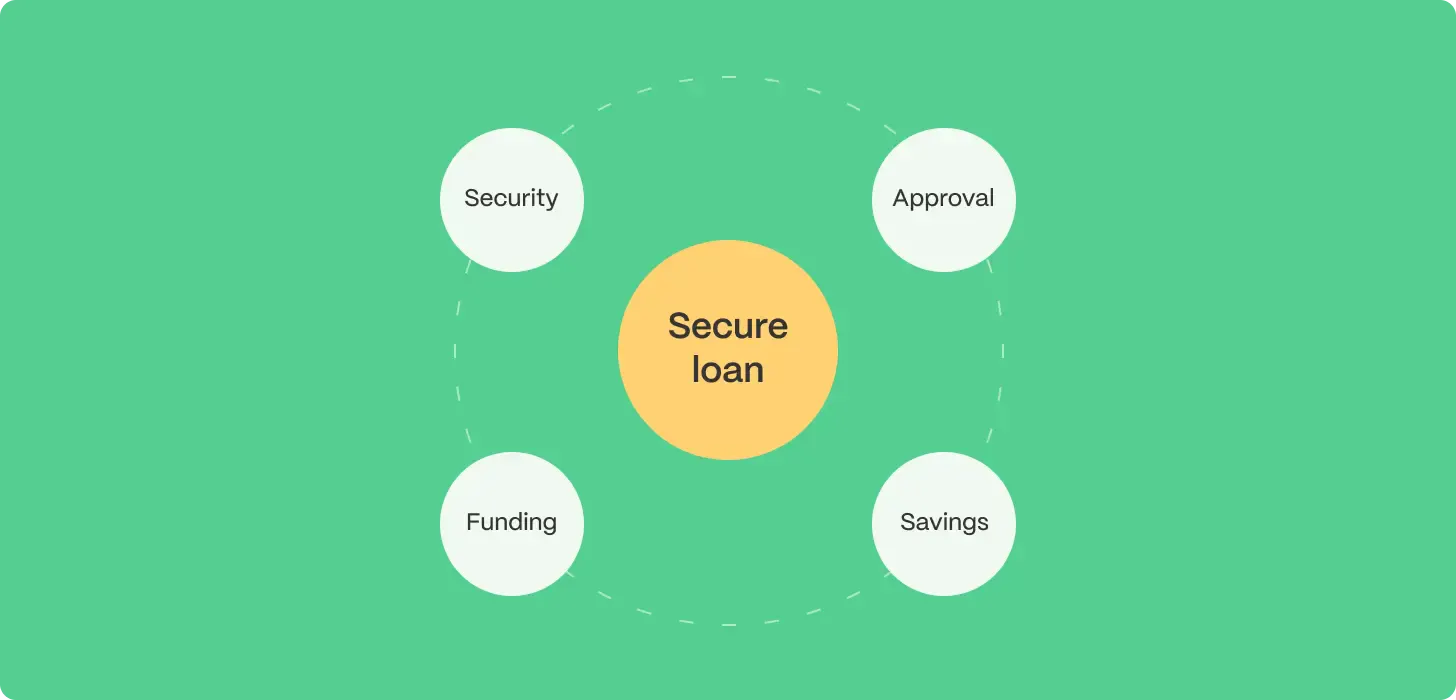
A secured loan can get you a lower rate and a larger amount, but you put an asset at risk. An unsecured loan costs more per dollar borrowed, but no specific property is on the line. Understanding these differences before you apply can save you from surprises down the road.
Here’s how they compare on the features that matter most:
| Feature | Secured loan | Unsecured loan |
|---|---|---|
| Collateral needed | Yes (car, home, savings, etc.) | No |
| Interest rates | Typically lower | Typically higher |
| Loan amounts | Often larger | Smaller (usually up to $50,000) |
| Approval standards | More flexible | Stricter (credit, income, DTI) |
| Funding speed | Slower (appraisals, title checks) | Faster (few business days) |
| Risk for you | You can lose the asset | No asset seizure, but credit damage and collections |
What is a secured personal loan?
A secured personal loan is any loan backed by an asset you own. If you stop paying, the lender can take that asset to recover their money. Because the lender’s risk is lower, secured loans typically offer better rates and easier approval than unsecured options. Common examples include:
- Car loan: the vehicle serves as collateral. Miss payments, and the lender can repossess it.
- Secured personal loan using savings: you pledge a savings account or CD. The lender freezes the funds until you repay the loan.
- Home equity loan: you borrow against the value of your home. Default could lead to foreclosure.
For a deeper look at how collateral actually functions in a loan, our article on what collateral is and how it works breaks it down.
What is an unsecured personal loan?
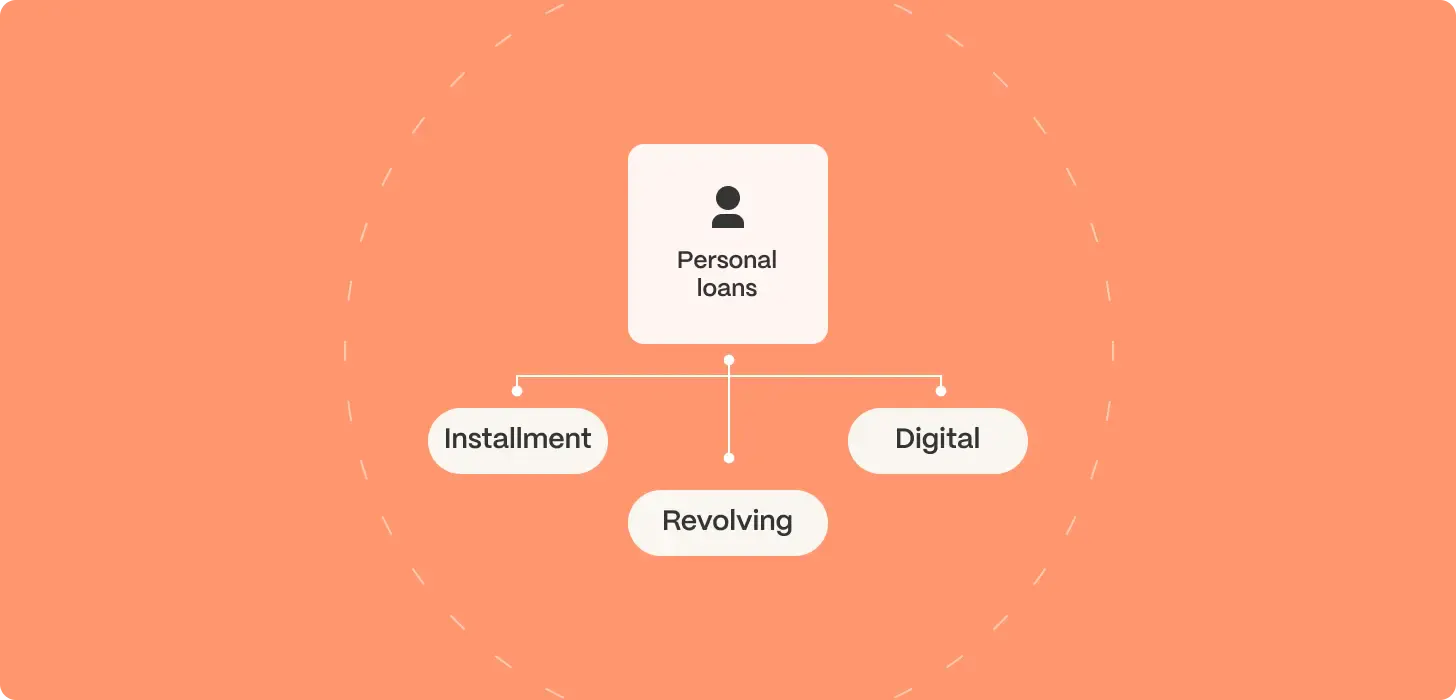
An unsecured personal loan does not require any assets as collateral. Approval depends on your credit score, income, and existing debts. If you default, the lender cannot seize your property, though your credit will still suffer. Here are the most common types:
- Standard personal loans: a fixed amount repaid in monthly installments. Most consumer personal loans fall into this category.
- Credit cards: a revolving line of credit. You can borrow, repay, and borrow again up to your limit.
- Online lender loans: same structure as standard personal loans, offered through digital‑first lenders. Approval and funding often happen faster than with traditional banks.
Key differences
The main differences between secured and unsecured loans come down to five things. Understanding each one helps you pick the right type for your situation. Let’s go through them one by one.
1. Collateral
Secured loans require an asset — a car, a home, or savings. Unsecured loans do not. That’s the core difference from which everything else flows.
2. Interest rates
Lower rates come with secured loans because the lender can take the asset if you stop paying. Unsecured loans carry higher rates to compensate for the lack of collateral.
3. Approval requirements
Secured loans are often easier to qualify for. The asset reduces the lender’s risk, so they may overlook weaker credit or limited history. Unsecured loans require stronger credit, stable income, and a lower debt‑to‑income ratio. For everything that goes into that evaluation, our article on how to get approved for a loan and what lenders look for covers it in depth.
4. Risk
With a secured loan, you can lose the asset. Default on a car loan, and the lender repossesses the vehicle. Default on a home loan, and foreclosure follows. With an unsecured loan, no specific property is at stake, but your credit will still be severely damaged, and collectors may come after you.
5. Loan limits
Secured loans allow larger amounts. Mortgages, home equity loans, and auto loans often reach tens or hundreds of thousands of dollars. Unsecured personal loans typically cap around $50,000, though some lenders go higher for strong‑credit borrowers.
Pros and cons of secured loans
Secured loans give you better rates and larger amounts, but they put an asset at risk. The trade‑off is simple: lower cost for the lender means lower cost for you — unless something goes wrong.
Potential advantages
Offering an asset as collateral changes the deal. Here’s what you gain:
Lower interest rates. Collateral reduces lender risk, which typically translates to better rates.
Higher loan amounts. Secured loans often allow substantially larger borrowing.
Easier approval for some profiles. Borrowers with limited or damaged credit may qualify more easily when collateral is involved.
Longer terms available. Mortgages in particular can extend repayment over decades.
May help rebuild credit. Secured products like share-secured loans are commonly used to establish a positive payment history.
Potential drawbacks
The same arrangement can turn against you. Let’s look at what you put on the line:
Asset at risk. Default means losing the collateral — a home, a car, or pledged savings.
More paperwork and slower funding. Appraisals, title searches, and other due diligence take time.
Fees are tied to the collateral. Appraisal, recording, and title fees can add up, especially on real estate.
Asset encumbered until payoff. You can’t freely sell or use the asset while the loan is outstanding.
Pros and cons of unsecured loans
Unsecured loans keep your property out of the deal, but they cost more and can be harder to get. You trade lower risk for higher payments and stricter approval. The trade‑offs break down into two main areas.
What works in your favor
Choosing an unsecured loan comes with clear upsides. You get several benefits:
No asset at risk. Default has consequences (credit damage, collections), but no specific asset is seized.
Faster funding. With nothing to appraise or title-search, unsecured loans are often funded in a few business days.
Simpler application. Less documentation tied to an asset.
Fixed rate and fixed payment. Most unsecured personal loans have fixed terms, giving predictable costs.
May still offer competitive rates. Strong-credit borrowers may see unsecured personal loan rates as low as 5.99% APR.
Where unsecured loans fall short
The same features have a downside. The main drawbacks are:
Higher rates overall. Lender risk is higher, so pricing is generally higher than on comparable secured loans.
Tighter approval standards. Credit, income, and DTI carry more weight when there’s no collateral. Wondering where your score actually needs to land? Our article on what credit score you need for a personal loan gives you a concrete answer.
Lower loan amounts. Personal loans are typically capped well below what secured products can offer.
Still, there are serious consequences for default. No collateral doesn’t mean no downside — credit damage, collections, and potential lawsuits are all possible.
Real-life examples
A single loan type doesn’t fit every situation. The following examples show how the same type of loan can work differently depending on the borrower’s credit, timeline, and assets.
Bad credit, need a car as collateral
Alex had poor credit and needed $8,000 for a home repair. A bank turned him down for an unsecured loan, but he owned a car worth $12,000 free and clear. Alex took out a secured loan using the car as collateral, qualified for a lower interest rate, and rebuilt his credit by making on-time payments.
Good credit, no collateral needed
Maria has good credit. She wants to consolidate $10,000 in credit card debt and cover a planned vacation. Maria qualifies for an unsecured personal loan at a competitive rate. No asset is at risk, and the loan funds will be available in two days. If you’re in a similar position and ready to compare options, our roundup of the best personal loans is a good place to start.
Emergency, speed matters most
Jordan faces an unexpected medical bill of $5,000. The hospital needs payment within a week. He doesn’t have time for a secured loan that requires an appraisal or title check. Jordan applies for an unsecured personal loan online, gets approved within hours, and the money arrives the next business day.
Which loan is easier to get?
Secured loans are generally easier to qualify for. The asset backing the loan reduces the lender’s risk, so they may approve applicants with weaker credit, lower income, or a thinner credit file. Unsecured loans require a stronger credit profile because the lender has nothing to seize if you stop paying. A low credit score or limited history makes approval harder and pushes rates higher. If you’re not sure how that number is put together in the first place, our guide on what a credit score is and how it works fills in the gaps.
Which loan is cheaper?
Loans that use collateral almost always have lower APRs. The lender takes less risk because they can seize your asset if you stop paying. That safety net allows them to charge less. Your credit profile still matters, though. A borrower with excellent credit might get an unsecured rate close to a secured option. Someone with poor credit, however, may not qualify for an unsecured loan at all, making a secured loan the only affordable path.
When a secured loan makes more sense
A secured loan isn’t always the answer, but in a few specific situations, it’s clearly the better choice. Here are three cases where putting up collateral works in your favor.
Poor or limited credit
If your credit score is low or your credit history is thin, unsecured lenders may turn you away. A secured loan uses your asset to offset your credit risk. Approval becomes possible, and the rate stays much lower than any unsecured option you could qualify for.
Need a larger amount
Unsecured personal loans typically cap at $50,000, and in some cases, even less. A secured loan backed by a car, home, or savings account can qualify for much higher amounts. If you need $75,000 for a major expense, a secured loan may be the only practical option.
Want lower interest
Even with strong credit, an unsecured loan costs more than a secured one. The difference might be one or two percentage points, but on a large balance over several years, that gap adds up to real money. When minimizing interest is your priority, a secured loan delivers.
When an unsecured loan makes more sense
You won’t always have an asset to pledge, and sometimes you just want to keep your property out of the deal. Let’s look at when unsecured borrowing is the smarter move.
No assets available
Not everyone owns a car or a home, and tapping into savings isn’t always wise. If you have nothing to pledge or don’t want to risk what you have, an unsecured loan keeps your property out of the deal. Approval depends on your credit and income.
Need fast approval
Secured loans take time. Appraisals, title checks, and paperwork can stretch the process to weeks. Unsecured loans are often approved within hours and funded in a few business days. When speed matters, unsecured borrowing is the clear winner. For a realistic breakdown of the full timeline, our guide on how long it takes to get a personal loan walks through every stage.
Smaller loan amount
If you need $5,000 or $10,000, a secured loan is usually overkill. The lower interest rate often won’t save enough money to justify the extra paperwork or the risk to your asset. For smaller loan amounts, an unsecured loan is typically simpler, faster, and safer.
Risks to consider before choosing
Each loan type comes with its own set of risks. Keep these in mind before you decide:
- Losing collateral (secured loan). You pledge an asset — a car, home, or savings — and if you stop paying, the lender can take it.
- High interest (unsecured loan). No collateral means higher rates. A smaller monthly payment can hide thousands in extra interest over time. If consolidating existing debt is what’s driving the decision, our article on debt consolidation vs personal loans helps you figure out which route makes more sense.
- Overborrowing. Both loan types make it easy to borrow more than you need. A larger loan means more interest, a higher payment, and longer debt.
Where Pennie Financial Fits
Pennie Financial helps you compare loan options before you commit. Fill out one form, see prequalified offers from multiple lenders, and decide which path fits your situation — all without a hard credit check. You can explore personal loans side by side.
To understand how the matching process operates, read how Pennie works. Once you choose an offer, the lender handles the formal application and hard inquiry.


Frequently Asked Questions
What’s the main difference between secured and unsecured loans?
Secured loans are backed by collateral — an asset the lender can claim if you default. Unsecured loans have no specific asset pledged.
Are unsecured loans more expensive than secured loans?
Usually, yes. Lenders price unsecured loans higher because they have no assets to recover in the event of default.
Is a personal loan secured or unsecured?
Most standard personal loans are unsecured.
Is it better to get a secured or an unsecured loan?
It depends on your situation. Secured loans typically have lower rates but put an asset at risk. Unsecured loans don’t involve collateral but usually come with higher rates.
What happens if I default on an unsecured loan?
No specific asset is seized, but the consequences are still serious: late fees, significant credit damage, collections activity, and potentially lawsuits.
Can I get an unsecured loan with bad credit?
It’s possible, but typically harder. Unsecured lenders rely more heavily on credit, income, and DTI.
Why are secured loan rates lower?
Because collateral reduces the lender’s risk.
Get loan offers in as little as 60 seconds
You deserve options. So we built an industry leading platform to compete for your business.

Loans up to $250,000
APR starting at 5.99%
Repayment terms up to 10 years
Your info is never sold