
Find the help you need for any problem
- Debt basics
- Personal loans
- Rates, fees & APR
- Credit score & eligibility
- Repayment & loan payments
- Loan application
- Debt consolidation
- All articles
What Is a Collateral Loan? How Secured Loans Work, Types, and Trade-offs

A collateral loan — also called a secured loan — is a loan backed by an asset you own. If you stop making payments, the lender has a legal right to take the asset to recover what they’re owed. Because collateral reduces the lender’s risk, collateral loans typically offer lower interest rates, higher borrowing limits, and easier approval than unsecured loans. The trade‑off is real, though: if you default, the asset is at stake.
Imagine using your car as collateral. Miss too many payments, and the lender could tow it away. The same goes for your home or savings. This article walks through how collateral loans work, the most common types, and how they compare to unsecured loans. You’ll also learn who they may make sense for and what to watch out for before using one of your assets as security for debt.
In this article:
- What is a collateral loan?
- What does collateral mean in a loan?
- How collateral loans work
- What can be used as collateral?
- Secured vs unsecured loans: what’s the difference?
- Why lenders require collateral
- Pros and cons of collateral loans
- What happens if you can’t repay a collateral loan
- When a collateral loan may make sense
- Risks to consider before using collateral
- Where Pennie Financial fits
- Final takeaway
- Frequently Asked Questions
What is a collateral loan?
A collateral loan is any loan where you pledge an asset — something you own of value — as security for the debt. If you repay the loan as agreed, nothing happens to the asset. If you default, the lender can legally take or sell the asset to recover what they’re owed.
Collateral loans are also commonly called secured loans because the lender's position is “secured” by the asset. The unsecured equivalent — where no collateral is pledged — is typically referred to simply as an unsecured loan. Common personal loans are usually unsecured; mortgages and auto loans are almost always secured.The concept of collateral itself is worth understanding before you go further — our article on what collateral actually means in a loan covers the essentials.
Because the asset reduces the lender’s risk, secured loans typically offer better terms: lower rates, larger loan amounts, and often easier approval for borrowers who might not qualify for unsecured products.
What does collateral mean in a loan?
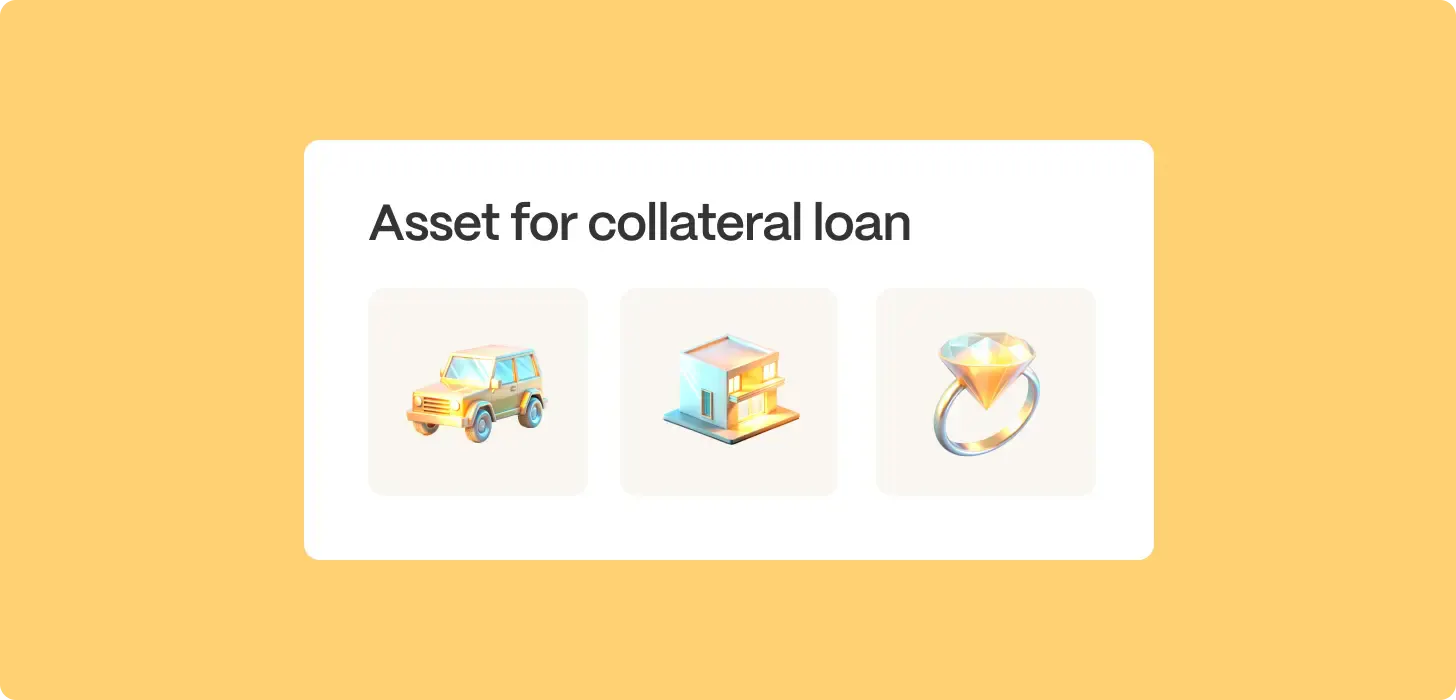
Collateral is something you own that a lender can take if you stop paying. It’s your side of the deal: you get money now, and the lender gets a safety net. Common examples include a car, a house, or a savings account.
If you repay the loan as agreed, the collateral stays yours. The lender has no claim on it. But if you miss too many payments, the lender can seize that asset and sell it to recover what you owe. The risk of losing your car, home, or savings is the main thing to weigh before you sign.
How collateral loans work
The mechanics of a collateral loan vary depending on the asset type, but the general framework is similar. The process breaks down into four main stages:
Pledging the asset
When you apply, the lender evaluates both your creditworthiness and the value of the asset you’re offering as collateral. They may require an appraisal (for a home), a vehicle valuation (for an auto loan), or a documented balance (for a savings-secured loan). You agree in writing that the lender has a legal claim to the asset until the loan is repaid. Wondering what else lenders typically ask for? Our article on personal loan requirements and eligibility has the full picture.
Loan-to-value ratio (LTV)
Lenders rarely lend the full value of an asset. The loan-to-value ratio is the percentage of the asset’s value that the lender will lend against. A home equity loan might have a maximum LTV of 80% or 85%. A title loan might only go to 50% or 60% of a vehicle’s value. The remaining percentage is the lender’s cushion in case they ever need to sell the asset to recover the debt.
Repayment
You repay the loan through fixed monthly payments over a set term, just like an unsecured personal loan. As long as payments are made on schedule, the lender has no right to take your collateral. When the loan is paid off, the lender releases their claim on the asset — you own it free and clear again.
Default
If you miss payments and eventually default, the lender begins the process of seizing and liquidating the asset. The exact process depends on state law and the type of asset involved, but the end result is the same: you may lose the asset to satisfy the debt.
Example of how a collateral loan works
You pledge a car worth $10,000 as collateral for a loan of $6,000. The lender values the car, documents its condition, and keeps the title until you repay the loan. You make monthly payments of $200 for three years. After the final payment, the lender returns the title, and the car is fully yours again. If you stop making payments, the lender can repossess the car, sell it, and apply the proceeds to your remaining balance.
What can be used as collateral?
Lenders accept different assets depending on the loan type. The most common ones are:
- Home — Mortgages and home equity loans use your house as collateral.
- Car — Auto loans and title loans use your vehicle as security.
- Savings account — Some credit unions offer loans secured by your savings balance.
- Certificate of deposit (CD) — Similar to a savings account, a CD can secure a loan.
- Investment account — Stocks, bonds, or mutual funds can serve as collateral, though lenders may discount their value to account for market swings.
- Valuable personal property — Jewelry, art, or collectibles can secure smaller loans, often through pawnshops or specialty lenders.
Types of loans that use collateral
Most consumers already have some experience with collateral loans, even if they haven't used that term. Here are the most common categories:
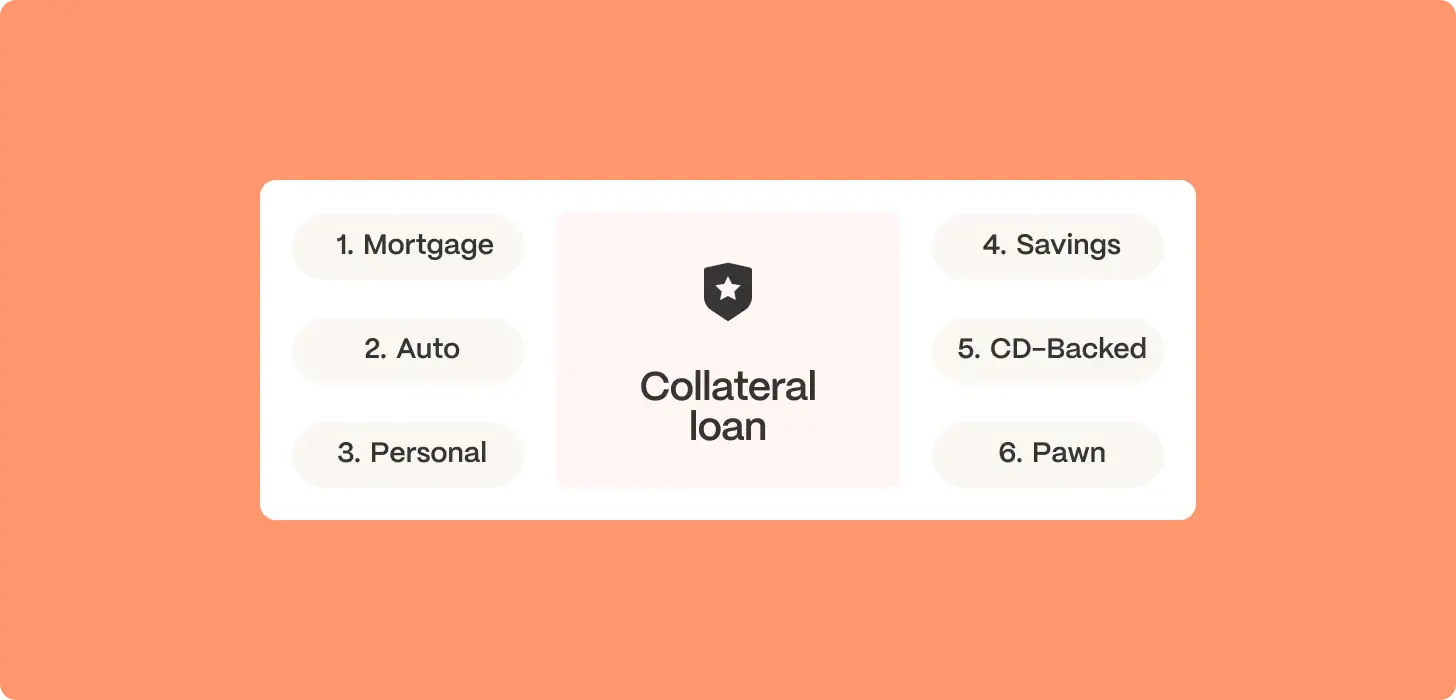
Mortgages and home equity products
Mortgages are the largest category of secured loans. The home itself is the collateral. If you stop paying, the lender can foreclose. Home equity loans and HELOCs let you borrow against the equity you’ve built up in your home — again, with the home as collateral. Not sure which route fits your situation better? Read our guide on HELOC vs personal loan.
Auto loans
When you finance a vehicle purchase, the vehicle is the collateral. If you stop paying, the lender can repossess the car. Auto loans typically offer lower rates than unsecured loans because of this collateral protection.
Secured personal loans
Some lenders offer personal loans secured by a savings account, certificate of deposit (CD), or other asset. Because the collateral reduces risk, these are often accessible to borrowers with less-than-strong credit and usually offer better rates than unsecured alternatives.
Share-secured and CD-secured loans
A common product at credit unions: you pledge a savings or CD balance, and the lender lends against it — usually up to 90% to 100% of the balance. The pledged funds are frozen until the loan is repaid. These are often used as credit-building tools.
Pawn loans
You bring in an item of value, the pawnshop lends you a portion of its appraised value, and you have a set period to repay with interest. If you don’t, the pawnshop keeps and sells the item.
Title loans
Short-term loans secured by your vehicle’s title. The lender keeps your title while the loan is outstanding. Rates are typically very high, and default can mean losing your vehicle.
Business loans secured by assets
Many business loans are secured by business assets — equipment, inventory, receivables, real estate — or by a personal guarantee from the owner.
For a broader picture of what’s out there beyond secured products, our guide on the types of personal loans maps the full landscape.
Secured vs unsecured loans: what’s the difference?
Secured loans require an asset you own as collateral. If you stop paying, the lender can take that asset. Unsecured loans do not use any collateral. Approval is based solely on your credit and income. If you default on an unsecured loan, the lender cannot seize your property, though your credit will still take a serious hit. Still weighing which path makes more sense for your situation? Our article on secured vs unsecured personal loans breaks down the trade-offs in full.
Secured vs unsecured loans (quick comparison table)
Each type has clear trade-offs. The table below shows how they stack up against each other.
| Aspect | Secured loan | Unsecured loan |
|---|---|---|
| Collateral needed | Yes | No |
| Interest rates | Typically lower | Typically higher |
| Approval standards | Easier to qualify | Stricter requirements |
| Loan size | Often larger | Usually smaller |
| Risk to your property | You can lose the asset | No asset at stake |
| Best for | Larger expenses, lower credit score, building credit | One‑time needs, strong credit, no collateral to offer |
Why lenders require collateral
Collateral gives a lender a way to recover their money if you stop paying. That safety net allows them to take more risk on the borrower. With collateral in place, they can offer lower interest rates, approve larger loan amounts, and say yes to people whose credit profiles might otherwise be too weak for an unsecured loan. Curious, what else tips the scales in your favor? Our article on what lenders actually look for when reviewing an application goes deeper.
The trade‑off is that you put a specific asset on the line. For the lender, the asset reduces the chance of losing money. For you, it means better terms — but with real stakes if something goes wrong.
Pros and cons of collateral loans
Offering an asset as security changes the deal for both you and the lender. You get better terms. The lender gets a safety net. But that safety net comes with real stakes.
Pros
Putting up collateral has a few clear upsides. Here’s what you stand to gain:
Lower interest rates
Larger loan amounts
Easier approval for weaker credit
Credit building potential
Cons
The same arrangement can turn against you if things go wrong. This is what you put at risk:
Loss of the asset
More paperwork and slower funding
Extra fees (appraisals, title checks, etc.)
Negative equity (owing more than the asset is worth)
What happens if you can’t repay a collateral loan
Missing payments on a secured loan puts your asset at risk. The lender doesn’t start with a tow truck after one late payment, but if you keep falling behind, the consequences escalate quickly.
What happens to your collateral if you default
Once you miss several payments, the lender can repossess your car, foreclose on your home, or simply take the money from a pledged savings account. After seizing the asset, they sell it. If the sale doesn’t cover your full debt, you still owe the remaining balance.
When a collateral loan may make sense
A collateral loan makes sense when you need more money than an unsecured lender will approve, when your credit is weak but you own a valuable asset, or when you want a low rate and have savings you’re willing to freeze.
Say you have $8,000 sitting in a savings account you don’t plan to touch. You need $5,000 for a home repair. Instead of withdrawing the cash, you take out a savings-secured loan. Your savings stay intact and continue earning interest while you repay the loan. You get a low interest rate, and the lender has its security. If you’re ready to start comparing options, our roundup of the best personal loans gives you a solid shortlist to work from.
Risks to consider before using collateral
Pledging an asset can backfire if you don’t plan carefully. The better terms — lower rates, larger loans, easier approval — come with real downsides. You need to weigh both sides before signing any secured loan agreement.
Key risks to understand before pledging an asset
Understanding these risks before you sign can save you from a costly mistake. Four specific dangers stand out:
- You can lose the asset (car, home, or savings).
- The approval process takes longer.
- You may owe more than the asset is worth (negative equity).
- You can’t sell or use the asset freely until the loan is repaid.
Where Pennie Financial Fits
Pennie Financial doesn’t lend money itself. It connects you with lenders through a single form and a soft pull, so your credit score never changes while you shop. You can look at personal loans from different lenders side by side. To understand the matching process, read how Pennie works. Once you pick an offer, the lender takes over for the formal application and hard inquiry.


Final takeaway
A collateral loan offers lower rates, larger amounts, and easier approval. The catch is a real one — your car, home, or savings sits on the line. Better terms come with genuine stakes. Before you pledge an asset, ask yourself whether the monthly payment fits comfortably, even if your income takes an unexpected hit.
Frequently Asked Questions
What is a collateral loan in simple terms?
It’s a loan backed by something you own — like a home, car, or savings.
What can I use as collateral for a loan?
Common collateral includes real estate, vehicles, savings accounts, CDs, investment accounts, valuable personal property, and business assets.
Are collateral loans easier to get than unsecured loans?
Often, yes. Because the asset reduces the lender’s risk, approval standards on collateral loans may be more flexible.
Do collateral loans have lower interest rates?
Generally, yes. Collateral reduces the lender’s risk, which usually translates into lower rates than on comparable unsecured loans.
What happens if I can’t repay a collateral loan?
Missed payments trigger late fees and credit damage. Continued non-payment eventually leads to default, at which point the lender begins the legal process to seize and sell the collateral.
Can I get a personal loan using savings as collateral?
Yes. Savings-secured personal loans are a common product, particularly at credit unions and some banks.
Is a car loan a collateral loan?
Yes. Auto loans are secured by the vehicle being financed.
Get loan offers in as little as 60 seconds
You deserve options. So we built an industry leading platform to compete for your business.

Loans up to $250,000
APR starting at 5.99%
Repayment terms up to 10 years
Your info is never sold