
Find the help you need for any problem
- Debt basics
- Personal loans
- Rates, fees & APR
- Credit score & eligibility
- Repayment & loan payments
- Loan application
- Debt consolidation
- All articles
How Many Personal Loans Can You Have at Once: Limits Explained

You’re still paying off a personal loan when the hot water heater dies. The repair bill lands, you don’t have the cash, and your credit card’s APR is punishing. A second loan seems like the only way out. There’s no law that says “stop at one.” No federal or state cap on how many loans you can hold. The real limit comes from two places: the lender’s own rules and your financial picture — income, existing debt, and credit history.
Some lenders approve a second loan while you’re still paying off the first. Others won’t. Some borrowers carry two or three loans without much strain. Others get rejected on their second try. What matters is how your profile lines up with the lender’s tolerance. This guide breaks down how these limits work, what lenders actually check, and how to spot when a second loan is a helpful tool versus a step toward real trouble.
In this article:
- Is there a limit to how many personal loans you can have?
- How many personal loans can you realistically have at once
- What lenders consider before approving multiple loans
- Multiple loans with the same lender vs different lenders
- How multiple personal loans affect your credit score
- Pros and cons of having multiple personal loans
- When having multiple personal loans may make sense
- When it becomes risky
- Alternatives to taking multiple personal loans
- Where Pennie Financial fits
- Final takeaway
- Frequently Asked Questions
Is there a limit to how many personal loans you can have?
No law says you can only have two personal loans. That kind of limit doesn’t exist. Instead, each lender makes its own rules and runs your finances through its own scoring model. Approval doesn’t hang on a magic number. It hangs on your income, existing debt, and how your credit looks to that particular creditor.
You could have a spotless record and still get turned down because one lender caps loans at one. Or you could have so much credit but strong income that convinces another lender to say yes. The ceiling isn’t written in any regulation — it’s whatever your income and debt load will quietly bear for that specific lender.
How many personal loans can you realistically have at once
In practice, most borrowers who carry multiple personal loans at the same time have one or two. Three or more becomes meaningfully harder to qualify for because each existing loan increases the monthly payment burden the next lender has to work around.
Most borrowers are approved for one or two loans at a time, depending on their financial profile. Beyond that, the declines stack up quickly because debt-to-income ratios climb and lenders start to view the applicant as over-leveraged. If you’re still weighing your options, check out our guide on unsecured personal loans, rates, requirements, and risks.
This isn’t a hard rule — a high-income borrower with low existing debt can sometimes qualify for more, and a lower-income borrower may be capped at one even if their credit is good. The number you can actually get approved for depends on the interaction between your income, your existing debt load, and the lender’s tolerance.
What lenders consider before approving multiple loans
When you apply for a second or third personal loan, the lender runs the same underwriting evaluation as the first time — but now your existing loan is part of the picture. Here are the three factors that drive the decision:
Debt-to-income ratio
Every existing loan adds a monthly payment to the DTI calculation. If your DTI was 25% before the first loan and that loan’s payment pushes it to 38%, a second loan application will be evaluated against the 38% number — not the 25%. Most lenders want DTI to stay under 40% to 45%.
Credit score and report depth
Multiple open loans show up on your credit report as separate installment accounts. If the first loan is new and still unseasoned, lenders often want to see a few months of on-time payments before extending another. A thin file with several recently opened loans is a red flag. Not sure where your score stands? Check out our article on what credit score you need for a personal loan.
Existing debt load and utilization
Beyond DTI, lenders look at total outstanding balances, credit card utilization, and how your overall debt is trending. Rising balances across multiple products suggest someone leaning on credit to cover gaps; falling balances suggest someone managing debt actively.
The cause and effect is simple: each loan already on your file tightens the window the next lender has to approve through. For a deeper look at how lenders evaluate applications, read our article on how to get approved for a loan and what lenders look for.
Can you have multiple loans with the same lender vs different lenders
Lender policies on second loans vary widely. One may approve you after a few months of on‑time payments; another may shut the door even with a spotless record. Switching lenders can sometimes work, but the new one still sees your existing loan and still runs the math on your total debt. The real question isn’t which lender you ask — it’s whether your paycheck leaves enough breathing room after covering what you already owe. For a full walkthrough of what the process looks like, check out our step-by-step guide on the loan application process from start to funding.
How multiple personal loans affect your credit score
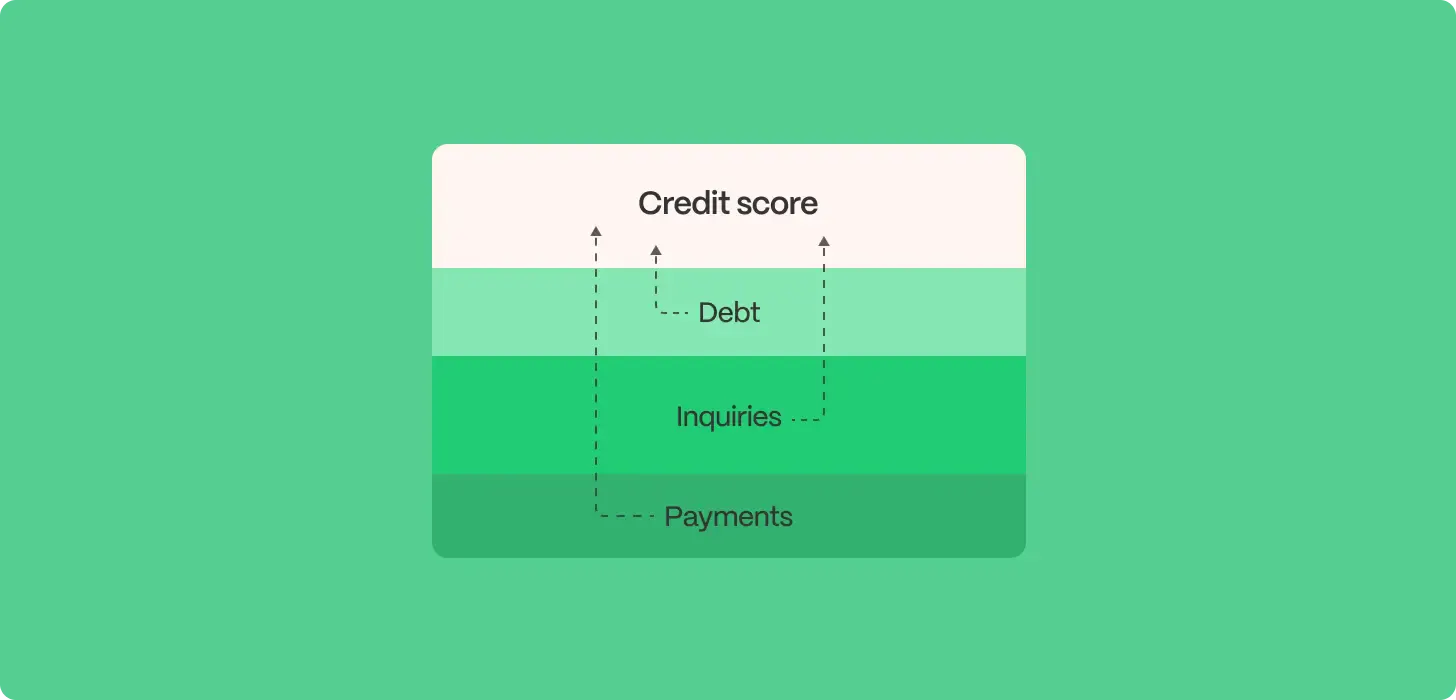
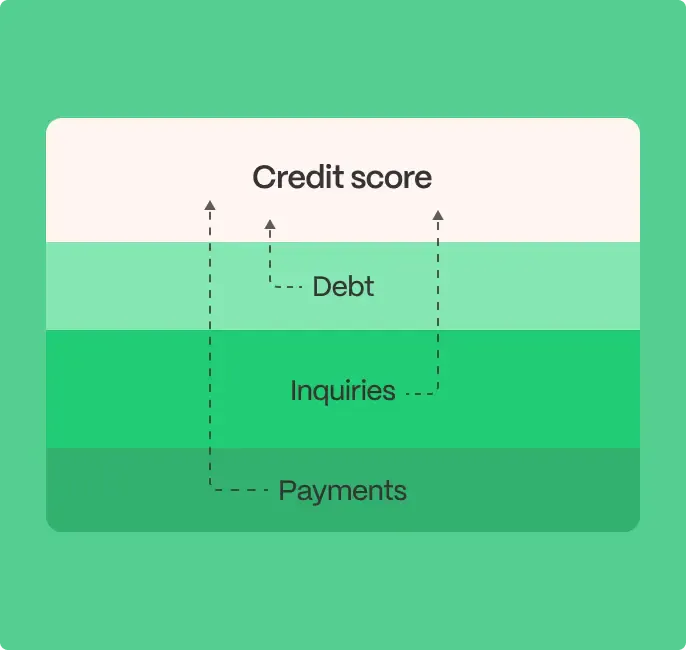
More loans mean more moving parts. Your credit score can rise or fall depending on how you handle the extra payments. Let’s look at what changes under the hood:
1. Payment history
Each loan adds another monthly due date. Pay them all on time, and your score gets positive reinforcement. Miss just one, and that single slip can pull your score down across the board. If you’ve already noticed a dip, read our article on why your credit score may have dropped.
2. Hard inquiries
Every new loan application triggers a hard pull. A single ding your score by a few points. Stacking two or three applications in a short window makes the damage compound.
3. Overall debt load
Scoring models notice when your total installment balances climb. Adding a second or third loan increases that load. Steady paydown helps your profile; rising balances across multiple loans signal stress.
The net effect depends entirely on how well you manage the loans. Handled wisely, multiple loans can actually strengthen your credit over time. Mishandled, even one loan can do serious damage.
Pros and cons of having multiple personal loans
Two loans can work better than one when the needs are separate, and the terms fit each purpose. A large medical bill might run on a three‑year loan while a smaller home repair follows a shorter, cheaper timeline. Different rates also mean you’re not overpaying on a small expense just because the larger loan’s schedule is longer. For a full breakdown of what’s available, read our guide on the types of personal loans.
The catch is that every extra loan adds a fixed monthly payment. Your income has to cover all of them, plus rent, utilities, food, and everything else. More payments leave less room for surprises. If your paycheck dips or an unexpected cost pops up, each new loan adds another layer of pressure — and they don’t stop compounding just because you hit a rough stretch.
The right balance comes down to one thing: whether your income has enough slack after you pay the things you can’t dodge. Multiple loans make sense when your borrowing is intentional, and your budget has padding. They become dangerous when each loan is just squeezing you a little tighter than the last.
When having multiple personal loans may make sense
There are specific situations where running two personal loans at once is a reasonable choice. Stable, comfortable income is the common denominator in all of them.
If you took a first loan for a planned expense and an unrelated, unavoidable need emerges before the first is paid off — a home repair or medical bill that can’t wait — a second loan is sometimes a better tool than putting the expense on a credit card at a higher APR. The same logic applies if your first loan was for consolidation and a separate, large one-time expense comes up independently. For a broader look at your options, read our guide on the best ways to consolidate credit card debt.
A borrower with rising income and declining existing balances is in a different position than one with flat income and rising balances, even if both carry one active loan today. The first can usually absorb another loan if needed; the second probably shouldn’t.
When it becomes risky
The warning signs that another loan is the wrong move are usually visible well before the application.
A DTI that’s already above 40% — counting existing debt — is a strong signal to stop. Adding another loan pushes it higher and squeezes the buffer that protects you if income drops or an unexpected expense hits.
Using a new personal loan to pay down or keep current on an existing loan. That pattern is usually the start of a debt spiral rather than a solution to one.
Alternatives to taking multiple personal loans
If the need that’s driving consideration of a second or third loan is ongoing rather than one-off, alternatives are often a better fit than stacking new loans.
Refinancing your existing loan can sometimes free up room by lowering the monthly payment or the rate. Debt consolidation — rolling existing loans and card balances into a single new loan with a lower blended rate — may actually reduce your total monthly obligation rather than add to it. A personal line of credit can give you flexible access to funds without a new fixed payment on top of your existing loan.
A borrower with a $10,000 personal loan at 15% and two credit cards totaling $8,000 at 24% may find that a single $18,000 consolidation loan at 11% replaces three payments with one and lowers the total monthly cost. For a broader look at your options, check out our guide on the best ways to consolidate credit card debt.
Not sure which path makes more sense for you? Read our article on debt consolidation vs personal loans.
Where Pennie Financial Fits
When a second loan may be the right tool, comparing options across lenders matters more than it did for the first. Pennie Financial connects borrowers with lending partners, so you can see prequalified offers side by side based on your profile. Browse personal loan options and compare what’s available — that’s useful whether you’re applying for an additional loan or considering a consolidation that would replace the loans you already have.
Approval and loan count limits still depend on each lender’s criteria — Pennie surfaces options, and each lender decides. Before you apply, take a look at how Pennie works to understand each stage of the process.


Final takeaway
There’s no fixed limit on the number of personal loans you can have, because the limit isn’t a rule — it’s a calculation. Your income, your existing debt, your credit profile, and the specific lender's policies all feed into it. For most borrowers, one or two loans at once is the practical ceiling. More than that is possible but uncommon and usually only workable for people with strong, stable finances and clear repayment plans. The question worth asking before applying for another loan is whether adding another fixed payment leaves you with enough room to handle the next surprise.
Frequently Asked Questions
Is there a legal limit to how many personal loans you can have?
No. There’s no federal or state cap on the number of personal loans a borrower can hold at once.
Can you have two personal loans at the same time?
Yes, and this is the most common multiple-loan situation. Qualifying for a second loan depends on debt-to-income ratio, credit profile, and the second lender’s willingness to approve.
Can you get a second personal loan from the same lender?
Sometimes. Some lenders allow it, sometimes after a seasoning period of on-time payments on the first loan; others cap concurrent loans per borrower at one.
Does having multiple loans hurt your credit score?
It can go either direction. On-time payments across multiple loans can strengthen a credit profile. Missed payments, rising balances, or several hard inquiries in a short window hurt it.
What is the maximum debt-to-income ratio for multiple loans?
Most lenders want DTI, including any new loan’s payment, to stay under 40% to 45%.
Can you refinance multiple personal loans into one?
Yes. A debt consolidation loan is designed exactly for this — pay off multiple existing loans and replace them with one new loan.
Is it better to have one large loan or multiple smaller loans?
One loan is generally simpler to manage and often cheaper in total interest. Multiple smaller loans can make sense when the needs are genuinely separate, and each loan’s term fits its purpose.
Get loan offers in as little as 60 seconds
You deserve options. So we built an industry leading platform to compete for your business.

Loans up to $250,000
APR starting at 5.99%
Repayment terms up to 10 years
Your info is never sold