
Find the help you need for any problem
- Debt basics
- Personal loans
- Rates, fees & APR
- Credit score & eligibility
- Repayment & loan payments
- Loan application
- Debt consolidation
- All articles
Why Did My Credit Score Drop? (Common Reasons and What to Do Next)

If you’ve logged in to check your credit and noticed your score dropped, the first thing worth saying is this: small and occasional credit score changes are normal. Scoring models are sensitive. Even actions that feel routine can move your number by a handful of points. A new credit card application, a balance that ran higher than usual last month, or an account you closed — any of these can be responsible. There is almost always a clear, identifiable reason behind a drop.
That’s the useful part. Once you know why your credit score dropped, you can usually work out whether it’s going to recover on its own or whether it’s pointing to something that needs attention. The most common causes, how each one actually affects your score, and what to do next are covered in this guide.
In this article:
- Key reasons your credit score may have dropped
- You missed or made a late payment
- Your credit utilization increased
- You applied for new credit
- You closed a credit account
- Your credit limit decreased
- There may be an error or fraud
- Major negative events (bankruptcy, collections, etc.)
- What to do if your credit score drops
- How to improve your credit score over time
- Where Pennie Financial fits
- Final thoughts
- Frequently Asked Questions
Key reasons your credit score may have dropped
Credit score drops almost always come from one of a handful of causes. Before going through them in depth, it helps to see the full list:
- A missed or late payment — the single biggest scoring factor
- Higher credit utilization — balances climbed relative to limits
- A new credit application — hard inquiries and a new account
- A closed account — reduces your available credit and may shorten your credit age
- A decreased credit limit — same balance, higher utilization
- Errors or fraud — wrong details that don’t belong on your credit file
- Major negative events — collections, charge-offs, bankruptcy, foreclosure
Some of these cause quick, recoverable dips. Others leave a longer mark.
You missed or made a late payment
The biggest factor in most credit scoring systems is payment history, accounting for roughly 35% of a FICO score. If you’re not familiar with how scoring models work in general, check out our guide on what a credit score is and how it works.
A single late payment that gets reported to the bureaus can knock tens of points off your score, and the higher your starting score, the sharper the drop tends to be. Someone with an 800+ score can lose 80 to 100 points from one 30-day late payment. Someone starting at 650 might lose 30 to 50.
Once you pass the due date by 30 days, most creditors will report the missed payment. A payment made a few days late — annoying, but not yet reportable — won’t usually show up on your credit report. Once it crosses the 30-day line, it becomes a data point that sits on your file for up to seven years, though the scoring damage fades gradually over time.
If you catch a late payment early and pay it quickly, call the creditor and ask whether they’ll report it. Some will grant a one-time courtesy removal if you’ve had a clean payment history with them. It’s worth a five-minute phone call.
Your credit utilization increased
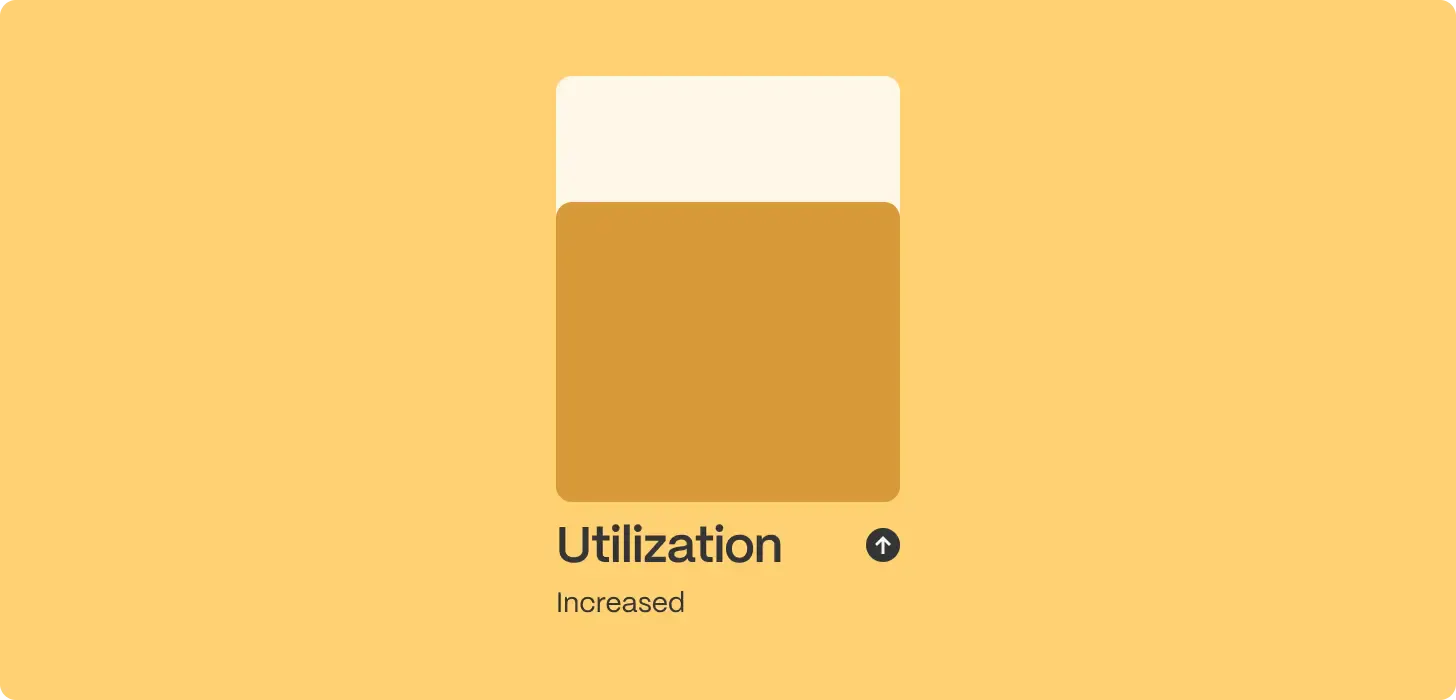
Credit utilization — the ratio of balances to credit limits across your revolving accounts — is the second-largest factor, roughly 30% of a FICO score. When your balances climb relative to your limits, utilization rises, and scoring models read that as higher risk. Most models start penalizing utilization above 30%, and the penalty gets steeper as you approach your limit.
Take a card with a $5,000 limit. Last month, your statement balance showed $500, which is a 10% utilization rate. This month, a few larger purchases pushed that balance to $2,250, or 45% utilization. Your score might drop 20 to 40 points, even without a single missed payment. This decline doesn’t have to be permanent. Pay the balance back down, and the score typically recovers within one reporting cycle.
A detail worth knowing: utilization is measured at statement close. A balance that jumps in the middle of your billing cycle, if repaid before the statement closing date, stays invisible to the bureaus. They only see what appears on the closing statement.
You applied for new credit
The lender performs a hard inquiry when you submit an application for a credit card, auto loan, or personal loan. That action trims a few points from your score. An inquiry remains on your credit report for two years, but its influence on your score disappears long before then — usually within 12 months. If you’re wondering whether prequalification does the same, check out our article on whether prequalification affects your credit score.
The effect of the inquiry is small. What follows — a new account — often matters more. A new account brings down the average age of your credit history. If you apply for multiple credit products within a short window, the combined hard inquiries may push your score even lower. One exception: rate‑shopping for a mortgage, auto loan, or student loan within a short window (14 to 45 days) usually counts as a single inquiry for scoring purposes.
This kind of dip is temporary. Once you start building an on‑time payment history on the new account, your score climbs back and can even end up higher than before you applied. To understand what lenders actually evaluate, read our article on how to get approved for a loan and what lenders look for.
You closed a credit account
Closing a credit card — especially an older one — can ding your score in two ways at once. First, it reduces your total available credit, which raises your utilization ratio on everything else even if you don’t spend more. Second, it can eventually shorten your average account age, though closed accounts in good standing typically stay on your report for about 10 years before dropping off.
If the closed account was your oldest credit line, the utilization hit is usually the more immediate problem. A card with a $10,000 limit and no balance was quietly contributing to a low overall utilization ratio. Remove it, and your ratio jumps on every other balance you carry.
Closing a card still sometimes makes sense — if it carries an annual fee you don’t want to pay, or if you’re worried about fraud on a dormant account. But if the reason is just “I don’t use it,” leaving it open (with a small recurring charge to keep it active) often does more for your score.
Your credit limit decreased
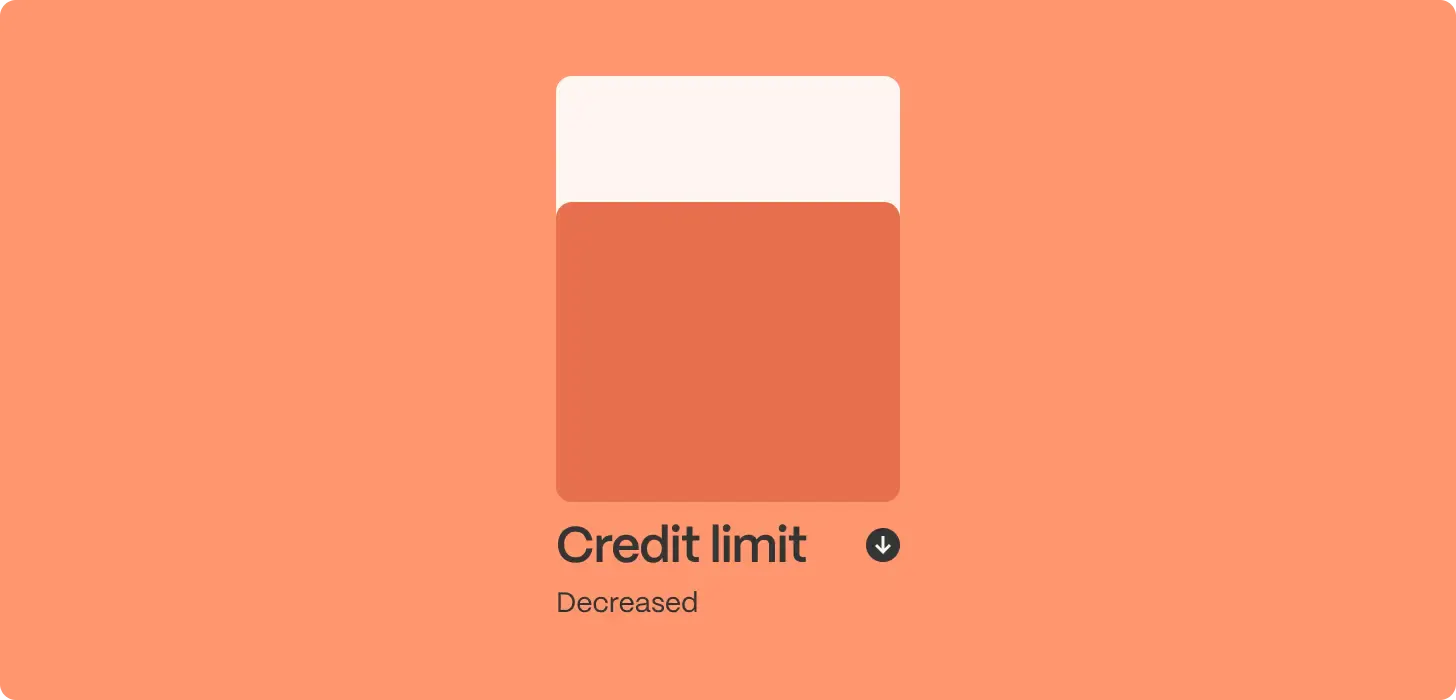
A credit limit reduction on an existing card works mathematically like closing part of the card. Your balance stays the same, but your available credit shrinks, which raises your utilization ratio. If the reduction is significant, the score impact can be noticeable.
Card issuers reduce limits for several reasons. They might see risk signals on your account, such as missed payments elsewhere or high utilization. Another possibility is a broad tightening of their portfolio.
Or the issuer may simply rightsize based on how much of the available credit you actually use. That adjustment often comes without any negative signal on your end. The issuer has to send you a notice about the change, so it’s worth opening this envelope rather than tossing it as junk mail.
There may be an error or fraud
Sometimes, a credit score drop has nothing to do with your behavior. An error on your report could be responsible — a payment marked late that wasn’t, an account you never opened, a balance that doesn’t match your records. Credit report mistakes are surprisingly common — much more than people typically assume. The FTC has found that a sizable number of consumers have errors serious enough to affect their scores.
Identity theft produces similar symptoms. If someone opens a credit account in your name and runs up a balance, both the new account and the inquiry hit your report. Depending on the payment behavior, your score can suffer a serious drop.
Major negative events (bankruptcy, collections, etc.)
Some credit events stand apart from routine score movements. A collection, charge-off, repossession, foreclosure, or bankruptcy filing doesn’t simply lower your score — it changes the whole picture. It’s not unusual to see a 100‑ to 200‑point drop. That black mark usually stays on your credit file for seven years, though a Chapter 7 bankruptcy can stick around for a full decade.
These events rarely come without warning. They usually follow a series of missed payments, unanswered collection calls, or a financial crunch that makes it impossible to keep up. Recovery takes time — measured in years. On-time payments, lower utilization, and the simple passage of time all help rebuild your file. If you need financing in the meantime, take a look at our guide on the best personal loans for fair credit.
For instance, a single charged‑off account from five years ago still appears on a borrower’s report but weighs less every year that passes without new negative items.
What to do if your credit score drops
A small drop usually doesn't need action. A larger or unexplained drop does. Work through these steps in order:
- Pull your full credit report. Get the complete file from all three bureaus (Experian, Equifax, TransUnion), including the score. Use a tool that shows the actual data behind your number.If you’re not sure where to start, here’s our guide on how to check your credit score.
- Identify the specific cause. Compare the report to what you expect. Look for a late payment that shouldn’t be there, a balance higher than you remember, or an account you don’t recognize.
- Take corrective action. For a real but recent issue — a missed payment or a high balance — bring the account up to date and pay the balance down. Errors need a dispute. Fraud calls for freezing your credit and filing an identity theft report.
- Give it time. Once you fix the cause, the score often recovers on its own. Utilization bounces back in one statement cycle. Inquiries stop affecting your score after roughly 12 months. Late payments take longer, but they hurt less as time passes.
How to improve your credit score over time
Rebuilding your credit score doesn’t require clever tricks. It runs on consistency. The core habits are deliberately simple:
- Pay every bill on time, every month. Set up autopay for at least the minimum to avoid slips.
- Keep utilization under 30% on each card. For the best scores, aim below 10%.If you're building toward a loan application, check out our article on what credit score you need for a personal loan.
- Open new accounts only when you truly need them. Unnecessary applications can knock your score down.
- Keep old cards open, even if you use them just once in a while.
- Make it a habit to examine your report yearly and flag anything off.
- Leave your longest‑held account active unless a truly good reason forces you to close it.
For a more detailed breakdown, read our guide on how to improve your credit score.
Where Pennie Financial Fits
A credit score is one of the core variables lenders evaluate when deciding whether to approve a loan and at what rate. If your score has taken a hit and you still need access to borrowing for a real need, you still have options.
Pennie Financial connects borrowers with lending partners across a range of credit profiles and lets you compare offers based on your individual situation, including personal loans. Approval and terms are set by the partners. For a closer look at how the platform matches you with lenders, see how Pennie works.


Final Thoughts
A sudden dip in your credit score can be unsettling, but it’s often part of normal score movement. Most of these declines trace back to a clear reason, and time alone will usually lift the number back up. A collection, bankruptcy, or fraud changes the game entirely — faster action and extra effort become necessary. For routine fluctuations, the same steady habits that built your credit in the first place will do the repair work.
If you’re looking at a fall right now, don’t guess. Pull your full credit report. The explanation is almost always there in plain sight. A small move rarely requires action. When the fall is larger or unexplained, the details on your report will tell you what’s really going on.
Frequently Asked Questions
Why did my credit score drop even if I paid on time?
Several reasons don’t involve missed payments. The most common are higher credit utilization (balances rose relative to limits), a recent credit application, a closed account, or a credit limit reduction. Any of these can drop a score by 5 to 40 points without a single late payment.
How many points can a late payment affect your score?
A single 30-day late payment can drop a FICO score by 30 to 100+ points, depending on your starting score. Higher starting scores lose more. The late payment stays on your report for seven years, but its impact fades over time.
How long does a credit score drop last?
It depends on the cause. Utilization-driven drops can recover in a single statement cycle once balances come down. Inquiry-driven drops fade within about 12 months. Late payments affect your score for up to seven years, with the heaviest impact in the first two. Major events like bankruptcies can shape a score for seven to ten years.
Can checking your credit score lower it?
No, not if you’re checking it yourself. That’s a “soft inquiry” and has no effect on your score. Hard inquiries — the kind triggered when a lender checks your credit because you applied for something — are what can cause a small, temporary drop. Prequalification checks are soft pulls, too.
What is the most common reason for a credit score drop?
Higher credit utilization is the most common cause of month-to-month score changes, because balances fluctuate naturally. A missed payment is the most damaging single cause.
How quickly can you recover from a credit score drop?
If the cause is utilization, one statement cycle after paying down the balance is often enough. If it’s an inquiry or a new account, recovery usually happens within 12 months as the account builds positive history. For late payments and serious events, recovery is measured in years.
Can high credit card balances lower your score without missing payments?
Yes. High utilization hurts your score on its own, independent of payment history. A maxed-out card that you pay in full every month still reports a high balance to the bureaus on your statement close date, and scoring models read that as elevated risk.
Get loan offers in as little as 60 seconds
You deserve options. So we built an industry leading platform to compete for your business.

Loans up to $250,000
APR starting at 5.99%
Repayment terms up to 10 years
Your info is never sold