
Find the help you need for any problem
- Debt basics
- Personal loans
- Rates, fees & APR
- Credit score & eligibility
- Repayment & loan payments
- Loan application
- Debt consolidation
- All articles
Personal Loans for Fair Credit: Options, Requirements, and What to Expect

If you’ve been told your credit is “fair,” you probably know the feeling. You’re not in the danger zone, but you’re also not getting the best rates out there. Many people in this situation assume they have no options. Others assume the rates will be so high that borrowing doesn’t make sense. Neither is entirely true.
The real question isn’t whether you can get a loan. It’s which lenders will say yes, what the loan will cost you, and how to avoid wasting time on applications that were never going to work. This guide walks through what lenders actually look at beyond your score, which loan types are realistic for fair credit, and what you can do to improve your chances before you apply. Understanding your options upfront beats applying blindly and hoping for the best.
In this article:
- What Is Considered Fair Credit?
- Can You Get a Personal Loan With Fair Credit?
- Unsecured Personal Loans
- Secured Personal Loans
- Co-Signed Loans
- What Lenders May Consider
- What to Expect When Applying
- How to Improve Your Chances of Approval
- Alternatives to Personal Loans for Fair Credit
- Final Thoughts
- Frequently Asked Questions
What Is Considered Fair Credit?
Credit scores are three-digit numbers that lenders use to estimate credit risk. FICO scores — the most common model — range from 300 to 850. Fair credit is typically 580–669. But not all lenders use FICO. Some use VantageScore, others use industry-specific models. A lender might check multiple scores.
The FICO score itself breaks down into five pieces:
- Payment history (35%): whether you pay on time.
- Credit utilization (30%): how much of your available credit you're using.
- Length of credit history (15%): how long your accounts have been open.
- Credit mix (10%): variety in account types (cards, loans, retail accounts).
- New credit inquiries (10%): recent applications for credit.
Need a refresher on what a credit score actually is and how it’s built? We cover that separately in what is a credit score and how it works.
Once you understand the score itself, the next step is pulling it. That’s where how to check your credit score comes in.
Can You Get a Personal Loan With Fair Credit?
Plenty of lenders work with people with fair credit. You’re not locked out. But compared to someone with excellent credit:
- Fewer lenders will say yes.
- Those who do may charge higher rates.
- Your loan amount might be smaller.
What lenders actually care about — not just your score:
- Your income and job stability
- How much debt you already have
- Your debt-to-income ratio
A fair credit score doesn’t automatically disqualify you. And a high score doesn’t guarantee approval either.
Personal Loan Options for Fair Credit
Fair credit doesn’t mean you have only one type of loan to choose from. Here are the main paths, starting with the most common.
Unsecured Personal Loans
An unsecured personal loan doesn’t require collateral. You don’t pledge your house, car, or savings account. The lender is betting you’ll repay based on your creditworthiness and income.
- How it works. You apply, the lender reviews your application, and if they approve you, you get a lump sum. You pay it back in monthly installments over a set term (usually 2–7 years). Interest rates depend on how much risk the lender thinks you pose.
- When it gets used. Consolidating credit card balances, paying medical bills, home repairs, or other expenses.
- Key considerations. Your rates will depend on your full financial profile — not just your credit score. Borrowers with fair credit and strong income or low existing debt often qualify for rates closer to what good-credit borrowers pay. You might get approved for a smaller amount, or the lender might suggest a co-signer for a better rate. Income requirements vary. Compare offers — the rates differ a lot from lender to lender.
- Scenario. You have fair credit, a stable job, and three credit card balances you want to combine. An unsecured personal loan gives you one payment each month at a fixed rate, which beats juggling multiple cards.
Secured Personal Loans
A secured personal loan is backed by collateral. You pledge a savings account, a car, or another asset. Because the lender can claim that asset if you don’t repay, they offer lower interest rates.
- How it works. You pledge an asset, apply for the loan, and if approved, you get the money. You pay it back in monthly installments. If you don’t pay, the lender takes the collateral.
- When it gets used. When you want a lower rate and you have an asset you’re willing to pledge. Often used for larger loans or longer terms.
- Key considerations. You’re putting up the asset. If you default, you lose it. That’s a real consequence. The application process is similar to unsecured loans, but approval odds are usually better because the lender’s risk is lower.
- Scenario. You have $3,000 in savings and want to borrow $5,000 at a better rate than unsecured lenders offer. A secured loan lets you do that by pledging the savings account.
Co-Signed Loans
A co-signer is someone else — usually a family member or close friend with better credit — who agrees to repay the loan if you don’t. The lender checks both of your credit profiles and incomes.
- How it works. You and the co-signer both apply. The lender evaluates both credit profiles and may approve you at a better rate because the co-signer’s credit reduces the lender’s risk.
- When it gets used. When your application looks shaky, or when you want a better rate.
- Key considerations. The co-signer is legally on the hook. If you miss a payment, the lender goes after them. It can damage their credit and your relationship. Only ask someone you genuinely trust and who fully gets what they're signing up for.
- Scenario. Your parents have excellent credit and agree to co-sign a $10,000 loan with you. That gets you a lower rate than you could get on your own.
For a full look at what personal loans offer, visit this personal loans page.
What Lenders May Consider
Your application is more than just a score. Lenders look at:
- Credit Score: A summary of your repayment history. Fair credit means higher rates, but approval is possible.
- Income: Lenders want stable, verifiable income — W2 wages, self-employment income, Social Security, disability benefits, whatever you get. Most want a minimum of $20,000–$30,000 annually.
- Employment Status: Stable employment is better. Job-hopping raises red flags.
- Debt-to-Income Ratio (DTI): How much of your gross monthly income goes to existing debt. Lenders usually want it under 50%
- Credit History Details: Not just the score, but patterns in it. Recent late payments matter more than old ones.
The full list of what lenders typically require is in our guide on personal loan requirements & eligibility.
What to Expect When Applying
When you apply for a personal loan with fair credit, the outcome isn’t random. But it does vary more than most people expect. Three things in particular are worth understanding upfront.
Interest Rates and APR
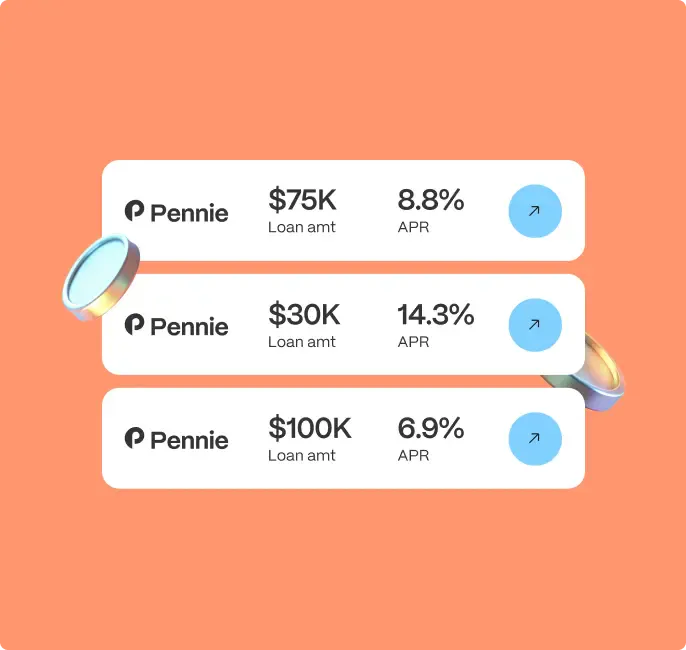
With fair credit, APRs typically range from 10% to 36%, but where you land in that range depends on several factors: the lender, your income, your overall debt picture, how much you’re borrowing, and the loan term. Many borrowers with fair credit land closer to the lower end of that range when they have stable income and manageable debt levels.
Rates vary significantly from lender to lender. Some cap out at 25%, others go higher. Some start as low as 8%–10%. That’s why comparing multiple offers is so important—you might be surprised at the difference between your best and worst offer. Using a marketplace can help you see offers from multiple lenders at once so you can find the most competitive rate for your situation.
Fees
Interest isn’t the only cost to watch for. What lenders may charge:
- Origination fees: 1%–8% of the loan amount, taken upfront or rolled into the principal. A $10,000 loan with a 5% fee might net you $9,500.
- Late payment fees: $10–$35 per late payment (varies).
- Prepayment penalties: Some lenders penalize early payoff.
Approval Variability
Approval isn’t guaranteed. Even with fair credit and a steady job, some lenders say no. Others approve you for less than you asked for, or at a different rate. But here’s the thing — getting pre-approvals from a few lenders (soft inquiries that don’t hurt your score) shows you what’s actually out there.
Many borrowers with fair credit are surprised to find they qualify with more lenders than expected, and that some offers come in with better rates than they anticipated. The key is casting a wide net.
See how the matching process works on Pennie Financial’s process page. For more on what the company offers, check the main page.
How to Improve Your Chances of Approval
A few moves before you apply can make a real difference. Here’s what helps the most:
1. Check Your Credit Score and Report First
Errors on your credit report are more common than people think. Fixing one can bump your score before a lender ever sees it.
2. Pay Down Existing Debt Where You Can
Lower credit card balances improve your credit utilization and your debt-to-income ratio. Even small reductions help.
3. Stabilize Your Income Before Applying
Lenders like consistency. If you just switched jobs, waiting a few months can work in your favor.
4. Keep Realistic Expectations
You won’t get approved for $50,000 on a $35,000 salary. Borrow what you actually need and can reasonably repay.
Before you apply, run through this checklist:
- Check your credit score
- Calculate your DTI ratio
- Gather income documents (pay stubs, tax returns)
- Compare offers from multiple lenders
If you have no credit history at all, our guide on how to secure a loan when you have no credit covers a different set of options. And if you’re wondering how a loan affects your score beyond the approval itself, see how personal loans affect your credit score.
Alternatives to Personal Loans for Fair Credit
A personal loan isn’t your only option when you have fair credit. Depending on your situation, here are other paths to consider:
Credit Cards
A secured credit card (backed by a deposit) can help you rebuild. You build credit history as you use it and pay it off. Interest rates are steep, but you don't owe a lump sum.
Secured Loans
Car title loans or pawnshop loans are quick and don't care much about credit. But they're short-term, expensive, and risky. Only use them in a genuine emergency with no other options.
Peer-to-Peer Lending
Some platforms connect you with individual investors willing to fund personal loans. Rates and approval odds can be decent for fair credit, but fees are often high.
Credit Union Loans
Credit unions usually have looser lending rules than banks and sometimes better rates for members.
Borrowing From Family or Friends
If you can, this is usually the cheapest route. Put the terms in writing to avoid later fights.
Not sure whether a personal loan or a line of credit makes more sense for your situation? Read personal loan vs line of credit to compare.
Final Thoughts
You can get a personal loan with fair credit. It's not one size fits all. The lenders willing to work with you, the rate you'll get, and how much you can borrow depend on your entire financial picture, not just your score. Do homework upfront. Understand what lenders care about. Get actual offers from multiple lenders and compare them. Fix what you can on your credit report. Lower some debt if you can.
Frequently Asked Questions
Can I get a personal loan with fair credit?
Yes. Lots of lenders have products for fair credit. Approval depends on your whole application—income, job stability, debt—not just your score.
What credit score is considered fair?
Fair is usually 580–669 on FICO. But different scoring models define it differently. Your lender might use FICO, VantageScore, or something else.
Are interest rates higher for fair credit loans?
They can be, but it depends on your situation. Fair credit APRs typically range from 10%–36%, and where you fall depends on income, existing debt, and the lender.
What do lenders look at besides credit score?
Income, job stability, existing debt, your debt-to-income ratio, and patterns in your credit history. A lower score doesn't automatically disqualify you if your income is solid and your employment is stable.
What is the best personal loan company for fair credit?
There's no single best. Different lenders work with fair credit, and what's best for you depends on what you're borrowing, how much, and for how long. Online lenders, credit unions, and lending marketplaces all work with fair credit borrowers.
Get loan offers in as little as 60 seconds
You deserve options. So we built an industry leading platform to compete for your business.

Loans up to $250,000
APR starting at 5.99%
Repayment terms up to 10 years
Your info is never sold