
Find the help you need for any problem
- Debt basics
- Personal loans
- Rates, fees & APR
- Credit score & eligibility
- Repayment & loan payments
- Loan application
- Debt consolidation
- All articles
Business Loan vs Personal Loan: What's the Difference and Which Should You Choose?

When your business needs money, two common options come to mind: a business loan or a personal loan. They’ll both give you cash, but don’t expect them to behave the same way. The real difference is whose name goes on the paperwork. A loan taken out by the company belongs to the business — lenders look at revenue history, how long you’ve operated, and overall financial health. A personal loan is tied to you alone, so your credit score, income, and existing debts are what get reviewed.
That split changes almost everything. You won’t see the same borrowing limits. The paperwork lenders ask for will look different. Liability lands on other shoulders, and credit reports end up showing the debt differently. The right choice comes down to your company’s stage, your personal credit, and what you actually need the money for.
Read through this guide to see how those differences play out. It’ll be easier to decide which route works for what you need.
In this article:
- Business loan and personal loan — quick differences
- What is a business loan?
- What is a personal loan?
- Business loan vs personal loan — key differences
- Can you use a personal loan for business purposes?
- Pros and cons of business loans
- Pros and cons of using a personal loan for business
- When a business loan may make more sense
- When a personal loan may make more sense
- Risks to consider before choosing
- Where Pennie Financial fits
- Final thoughts
- Frequently Asked Questions
Business loan and personal loan — quick differences
You already know the basic categories. But before getting into the details, it helps to see how they differ on the points that matter most to someone borrowing for a business. Look at what separates these two loan types.
1. Business loan.
Designed for company use, approved based on revenue, how long you’ve been operating, and business credit. Often requires collateral or a personal guarantee.
2. Personal loan.
Approved based on your credit and income. Usually unsecured, more flexible, and typically faster to close.
3. Who’s liable.
With a business loan, the company is responsible (though owners often sign guarantees). A personal loan is yours alone.
4. Typical size.
Business loans often start around $25,000 and can go up to several million dollars. Personal loans are more common in the $1,000 to $50,000 range, though some lenders offer up to $250,000 or higher, depending on your credit and income.
5. Speed.
An online personal loan can be funded in a day or two. Two to four weeks is normal for a traditional business loan. Add more time if the application is complex or the lender is slow.
What is a business loan?
A business loan is money borrowed by a company — whether an LLC, a corporation, a partnership, or a sole proprietorship — to cover something the business needs. That could be working capital to handle payroll during a slow month, buying equipment, opening a new location, or stocking up on inventory before a seasonal rush.
Lenders focus on the company itself. They check how long it’s been operating, revenue trends, existing debt, cash flow, the industry, and business credit scores from agencies like Dun & Bradstreet or Experian Business. For newer companies without much history, lenders often rely on the owner’s personal credit and may ask for a personal guarantee.
Lenders usually ask for business tax returns, profit and loss statements, and bank statements covering several months. For larger loans, you might also need a business plan. And some lenders will want collateral. Common financing sources include SBA loans, traditional bank loans, and online business lenders. SBA loans are government-backed with longer terms, but the process is slower. Online lenders move faster but usually charge more.
What is a personal loan?
A personal loan is money you borrow as an individual. It shows up as a liability on your personal credit report. Most of these loans are unsecured — no collateral required.For a closer look at how this works in practice, you can read our guide on unsecured personal loans, rates, and risks. Approval is based on your creditworthiness and ability to repay.
Lenders look at your credit score, income, existing debts, and employment. For more detail, check out our article on personal loan requirements and eligibility. Since there’s no collateral or business financials to review, the process runs much faster than a business loan. Lenders say yes or no by looking at your credit record and whether your income supports the payments.
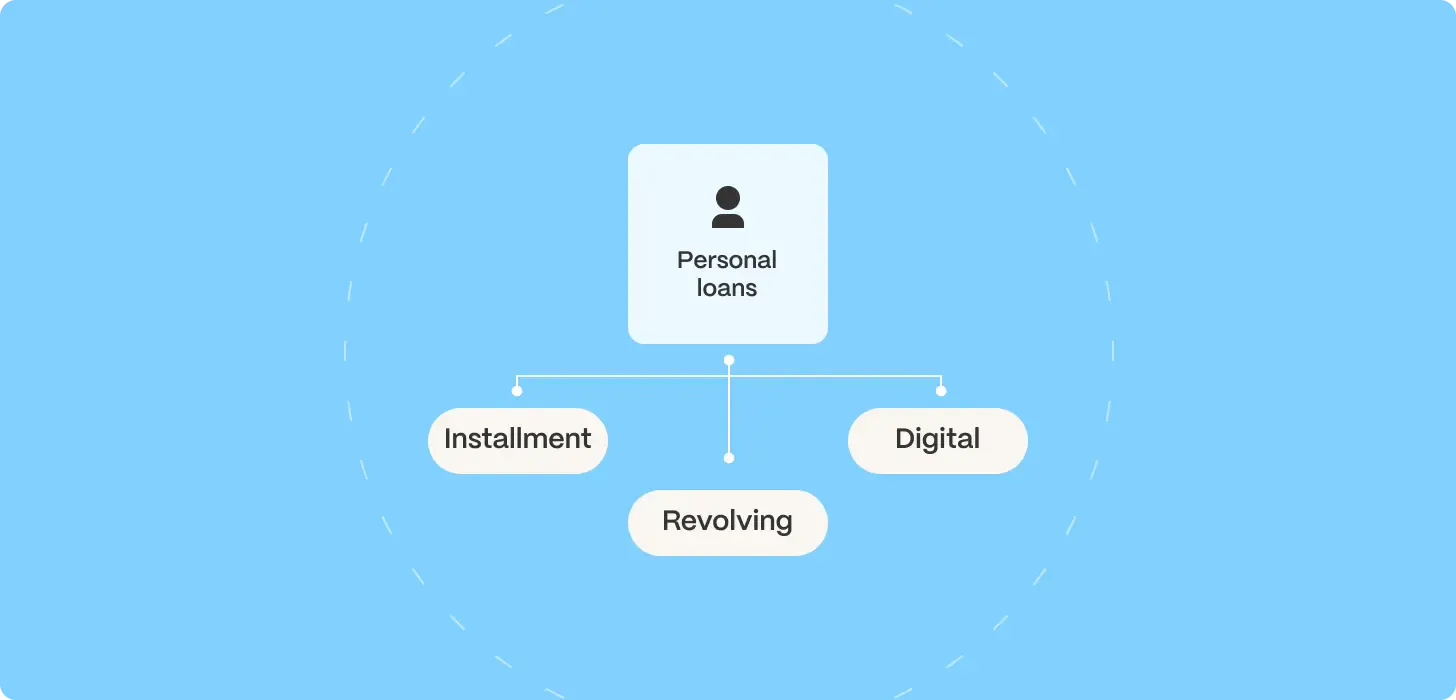
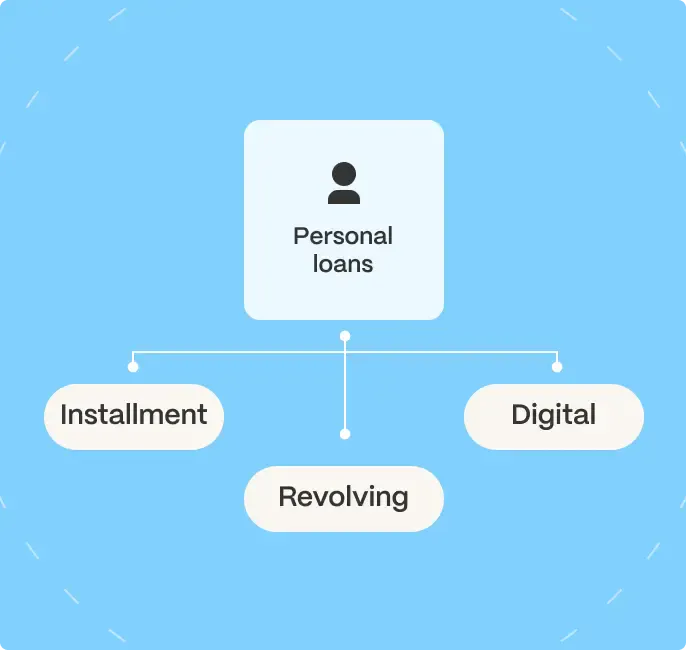
The funds are also flexible. Most lenders don’t restrict their use, with a few common exceptions like post-secondary education or investments. That’s why people turn to these loans for medical bills, home projects, or even starting a small business. You can compare offers from different lenders based on your profile before you apply. If you’re still choosing between options, our guide on the types of personal loans breaks down what’s available.
Business loan vs personal loan — key differences
Choosing between a business loan and a personal loan isn’t random. The table below shows what separates these two options:
| Business loan | Personal loan | |
|---|---|---|
| Purpose | Restricted to business use (equipment, working capital, expansion, inventory) | Generally flexible — most lenders don’t restrict how funds are used |
| Approval criteria | Business revenue, time in business, business credit, owner credit, industry | Personal credit score, income, debt-to-income ratio, employment |
| Liability | The business is the borrower; personal guarantee often required | Fully personal — your credit, your liability |
| Loan size | Often $25,000 to $5M+ depending on lender and program | Usually $1,000 to $50,000, up to around $250,000 with some lenders |
| Documentation | Business tax returns, P&L, bank statements, sometimes a business plan | Pay stubs, ID, personal tax return, bank account info |
| Flexibility | Funds typically must be used for stated business purpose | Funds can usually be used however the borrower chooses |
A business loan ties your financing to the health of the business, while a personal loan ties it to your personal finances. Each comes with its own trade-offs around access, cost, and risk. If you’re ready to move forward, check out our step-by-step guide on the loan application process.
Can you use a personal loan for business purposes?
Lenders usually let you use a personal loan for almost anything. The fine print may exclude a few things — education expenses, gambling, or buying securities — but starting or funding a business isn’t typically one of them.
Approval depends on your personal credit and income. The lender isn’t betting on the business idea or its future revenue. That cuts both ways. A new business with no track record can still get funding, because the lender focuses on you.
Using a personal loan shifts all financial responsibility to you as the borrower. Even if the money goes toward business expenses, the lender has no claim on the business. They have a claim on you.
Pros and cons of business loans
A business loan gives you access to more capital and keeps the debt off your personal credit. But it also comes with a longer process and stricter requirements. Here’s how the advantages and downsides compare:
Pros
Larger loan amounts available.
Longer repayment terms on many programs.
Keeps business debt off personal credit (with some exceptions).
Builds business credit history when paid on time.
Structured for business cash flow cycles.
Cons
Slower approval — weeks, sometimes longer.
Heavier documentation requirements.
Newer businesses may not qualify without a guarantee.
May require collateral.
Industry restrictions are common.
The business loan process carries more complexity than most first-time borrowers expect. The underwriting is deeper because the lender is essentially evaluating the viability of the business.
Pros and cons of using a personal loan for business
A personal loan gets you money fast with less paperwork. But it puts your personal credit at risk and mixes your finances. What you’re getting into:
Pros
Faster approval — often same or next day.
Lighter documentation.
Accessible to new businesses without financial history.
Fixed rate, fixed term — predictable payments.
Typically unsecured, so no business collateral at risk.
Cons
Smaller loan amounts.
Personal credit takes the hit if payments slip.
Rates may be higher than a comparable business loan for established borrowers.
Mixes personal and business finances.
Can reduce your available personal credit for other needs.
The trade-off is access vs. separation. You get speed and easier qualification, but your personal credit and business finances become intertwined. That’s fine for many borrowers. It’s important to walk in aware of it.
You can go deeper on this in our article on how to get approved for a loan and what lenders look for.
When a business loan may make more sense
A business loan works well when a company already has some history and needs more money than a personal loan can provide. Lenders look for consistent revenue, clean business credit, and paperwork that’s ready to go.
You might choose this path if you need a larger amount for a specific business purpose — like funding a new product line or expanding into a new space. It also helps build your company’s credit separately from your personal history.
Take a restaurant that’s been operating for five years and needs $200,000 to open a second location. The owners have strong revenue, tax returns, and a signed lease. A business loan — likely an SBA 7(a) or a term loan from a regional bank — fits the scale and the use case.
When a personal loan may make more sense
A personal loan gives new businesses a practical path to cash. Young companies often lack the financial records traditional lenders require. Approval looks solely at your personal credit and income, leaving business revenue and operating history aside. If you're unsure where you stand, check out our guide on what credit score you need for a personal loan.
Speed makes personal loans attractive for smaller needs. Online lenders often decide within a day and fund the next business day — much faster than most business loan programs. This speed matters when an opportunity or expense won’t wait weeks for approval. Personal credit can also substitute when traditional business lenders decline your industry or credit profile.
Consider a freelance designer who needs $8,000 for equipment, software, and marketing. Their business has a seven‑month history — shorter than most business lenders prefer. A personal loan closes in 48 hours, using the designer’s W‑2 income as the qualifying factor.
Risks to consider before choosing
Borrowing for a business — regardless of which side of this decision you land on — carries risks that deserve a clear look before you sign. Each loan type distributes those risks differently. The main ones are spelled out below.
Personal liability
A personal loan makes you fully responsible from day one. A business loan may also require a personal guarantee, but that usually kicks in only after the company defaults — a buffer a consumer loan doesn’t offer.
Impact on personal credit
Money you borrow for your company and put toward consumer debt shows up on your credit report like any other obligation. If the business goes through a slow stretch and you miss a payment, your score takes the damage. A pure business loan without a personal guarantee can stay off your credit report, though that arrangement is hard to get as a small business.
Higher debt burden and repayment pressure
Whatever the source, a new loan means a new monthly payment that has to be earned. For a young business, that pressure can force decisions you wouldn’t otherwise make.
Mixing personal and business finances
Using personal credit to fund business expenses blurs a line that lenders, accountants, and tax preparers generally prefer to see clearly drawn. It can complicate bookkeeping, make future business-loan applications harder, and affect how your personal credit utilization looks.
Stricter requirements or collateral risk for business loans
Business lenders often ask you to pledge business assets or personal property. Defaulting doesn’t just hurt your credit — you could actually lose what you put up. That’s a risk personal loans don’t carry.
Any loan used to fund a business creates an obligation that persists whether the business succeeds or not. Factor that into the decision before signing. If you’re still weighing the decision, check out our article on whether personal loans are a bad idea.
Where Pennie Financial Fits
If you need money for a business cost, a personal loan can be a faster alternative. Pennie Financial is a lending marketplace where you submit one application and see offers from multiple lenders. The platform matches you with lenders based on your profile — without guessing or a hard pull upfront. You can also check current rates and terms on personal loans.
For a closer look at how the platform matches borrowers with lenders, see how Pennie works. Approval and final terms come from the lending partners. You stay in control of which offer, if any, you decide to accept.


Final thoughts
There’s no universal answer to business loan vs personal loan. The right choice depends on where the business is in its life cycle, how much risk you’re comfortable absorbing personally, and how quickly you need the money to move. An established business with clean financials and a larger funding need will generally get better structure and cost from a business loan. A newer operation, a smaller ask, or a tight timeline often points toward a personal loan.
What matters more than the label is being clear-eyed about the trade-offs. Personal loans shift liability onto you. Business loans take longer and ask more of the business. Either way, the goal is matching the tool to the job — and knowing what you’re signing up for before you do.
Frequently Asked Questions
Can you legally use a personal loan for business expenses?
Yes, in most cases. Most lenders don’t restrict how personal loan funds are used, though some exclude specific uses like education or investment purchases. Business spending is almost always allowed.
Is a business loan harder to get than a personal loan?
Generally, yes. Business loans require more documentation, evaluate the business itself, and often take weeks to close.
Which loan type offers higher borrowing limits?
Business loans. Many business-loan programs reach well into six or seven figures, while most personal loans cap around $50,000 to $100,000.
Does a business loan affect your personal credit score?
Usually only if it’s structured with a personal guarantee and you default, or if the lender reports to personal credit bureaus. Most pure business loans report to business credit bureaus rather than personal ones.
What are the risks of using a personal loan for business?
The biggest ones are personal liability, impact on your personal credit if the business can’t make payments, reduced available credit for personal needs, and the blending of personal and business finances that can complicate accounting and future borrowing.
When should you avoid using a personal loan for business?
When the funding need is large enough that it would strain your personal credit utilization, when you are planning to apply for a mortgage or other major personal financing soon, or when the business is established enough that a true business loan with better terms is actually available.
Can startups qualify for business loans?
Some can, but it’s harder. Without a track record of revenue, many business lenders won’t underwrite. SBA microloans and some online business lenders cater to startups, but they often require personal guarantees, a strong business plan, or collateral.
Get loan offers in as little as 60 seconds
You deserve options. So we built an industry leading platform to compete for your business.

Loans up to $250,000
APR starting at 5.99%
Repayment terms up to 10 years
Your info is never sold