
Find the help you need for any problem
- Debt basics
- Personal loans
- Rates, fees & APR
- Credit score & eligibility
- Repayment & loan payments
- Loan application
- Debt consolidation
- All articles
Are Personal Loans Bad? A Balanced Look at the Pros, Cons, and When They Make Sense

Personal loans get a mixed reputation. Some people view them as a useful way to consolidate debt or fund a large planned expense. Others view any loan as something to be avoided if possible. So are personal loans bad? The honest answer is that personal loans are a tool — neither inherently good nor inherently bad.
Whether they help or hurt depends on why you’re borrowing, how much you’re borrowing, what rate and terms you’re getting, and how the monthly payment fits into your budget. This guide walks through the real pros and cons, common situations where a personal loan may help, situations where one likely won't, and how to decide whether borrowing is the right move for you.
In this article:
- Are personal loans bad?
- When a personal loan may actually make sense
- When personal loans can become a problem
- Common benefits of personal loans
- Key risks to understand before borrowing
- Real‑life examples: good vs bad use of a personal loan
- How personal loans affect your credit score
- Questions to ask before taking a personal loan
- Alternatives to consider before borrowing
- Final takeaway
- Frequently Asked Questions
Are personal loans bad?
Personal loans aren’t bad by default. They’re a financial tool — neither good nor evil on their own. A personal loan can help you consolidate expensive credit card debt, cover an emergency repair, or fund a necessary expense when you don’t have cash on hand.
The same loan can become a problem if you borrow more than you can repay, use it for discretionary spending you can’t afford, or ignore how the rate and fees stack up. The question isn’t whether personal loans are bad. It’s whether a specific loan, with its specific rate and payment, makes sense for your specific situation.
When a personal loan may actually make sense
Sometimes borrowing puts you in a better spot than the alternative. The trick is knowing which situations justify the cost. Here are three cases where a personal loan may be a reasonable choice.
Consolidating higher-interest credit card debt
This is one of the most common reasons people use personal loans. Credit cards typically carry variable APRs in the 20% range or higher, and minimum payments are structured to extend repayment over many years.
Replacing multiple card balances with a single fixed-rate personal loan may reduce total interest paid and give you a clear payoff date. The keyword is “may” — this works only if the loan rate is meaningfully lower than what you’re currently paying and you don't run the cards back up.
Funding a necessary, planned expense
Medical procedures, essential home repairs, emergency vehicle repairs, or moving costs for a job opportunity can all be legitimate reasons to borrow if you don’t have cash reserves and the alternative is missing the expense entirely or using higher-cost credit. A fixed monthly payment often makes the cost predictable and manageable.
Replacing even more expensive debt
Payday loans, title loans, and some buy-now-pay-later products carry very high effective rates. A personal loan, even one with less-than-ideal terms, may still be substantially cheaper than those alternatives.
Consider someone with $12,000 spread across three credit cards, carrying APRs between 22% and 26%. If they qualify for a personal loan at a lower rate and use it to pay off all three cards, their total interest over the repayment period drops meaningfully compared to making minimum payments on the cards. They also trade three variable payments for one fixed one.
Common benefits of personal loans
Personal loans offer a few clear advantages over other forms of borrowing. They work particularly well when you need a fixed amount for a specific purpose and want predictable terms. The main benefits are:
- Predictability – A fixed monthly payment that never changes, so you can budget without surprises.
- Consolidation – Replace multiple credit card payments with one single loan, often at a lower rate.
- Fixed payments – Your rate stays the same for the life of the loan. No variable APR to worry about.
Our article on types of personal loans explains the differences between secured, unsecured, fixed-rate, and other variations.
When personal loans can become a problem
A personal loan doesn’t have to be a mistake. But there are clear patterns where it usually turns into one. The most common problems come from three sources: using the loan for stuff you can’t afford, ignoring the rate, or skipping the math on whether you can actually make the payments.
Here’s a quick look at good use versus risky use:
| Good use | Risky use |
|---|---|
| Consolidating high‑interest credit card debt at a lower rate | Taking a loan for a vacation, wedding, or luxury purchase |
| Covering an unexpected medical bill or urgent home repair | Borrowing because you ran out of cash and haven’t fixed the budget |
| Replacing a payday or title loan with cheaper financing | Using a loan to pay off cards, then running the cards back up |
| Choosing a term where the payment fits comfortably | Picking the longest term just to lower the payment, ignoring total interest |
Key risks to understand before borrowing
A personal loan isn’t free money. The same features that make it useful can also work against you if you’re not careful. The main risks to watch for are:
- High APR A high rate can turn a manageable loan into a heavy monthly burden. The difference between a 10% APR and a 25% APR on the same amount adds thousands of dollars in extra interest. If you want to see where those extra costs actually come from, our breakdown of how personal loan rates and APR work helps make sense of what you’re really paying.
- Fees – Origination fees reduce the amount you actually receive. A loan with a low rate but a high fee may end up costing more than a loan with a slightly higher rate and no fee.
- Debt accumulation – Using a personal loan to pay off credit cards works only if you stop using the cards. Run the balances back up, and you end up with both card debt and a loan payment.
- Credit impact – Missing a payment damages your credit quickly. Defaulting on a loan leaves a mark on your report for up to seven years.
Borrowing at a very high rate — anything above 30% APR — rarely makes financial sense. At that level, the interest alone eats up most of your payment, and the loan becomes a long anchor rather than a helpful tool. Exhaust other options first.
If you’re unsure how lenders evaluate applications after bankruptcy, our article on how to get approved for a loan walks through the underwriting process step by step.
Real-life examples: good vs bad use of a personal loan
Three people borrow money. One gets ahead, one falls behind, and one escapes an even worse deal. Here’s how their outcomes differ.
Alex has $8,000 on two credit cards with APRs near 24%. He consolidates the balances into a personal loan at 10%, and his total interest over the life of the loan is less than half of what he would have paid on the cards.
Jordan takes a $5,000 personal loan to upgrade furniture and cover a vacation. The rate is 18%, and the origination fee eats up 5% of the loan. The monthly payment fits at first, but when her car breaks down three months later, she has no room left in her budget. She misses a payment, then another. Her credit score drops, and the loan ends up costing far more than the original purchase.
A third person, Chris, uses a personal loan to pay off a payday loan. The payday loan had a 300% effective APR. The personal loan rate is 22%, which looks high on paper but saves Chris thousands of dollars. He pays it off in a year and walks away with his credit intact.
Not sure whether a personal loan or a credit card fits your situation better? Our article on personal loan vs credit card breaks down the trade‑offs.
How personal loans affect your credit score
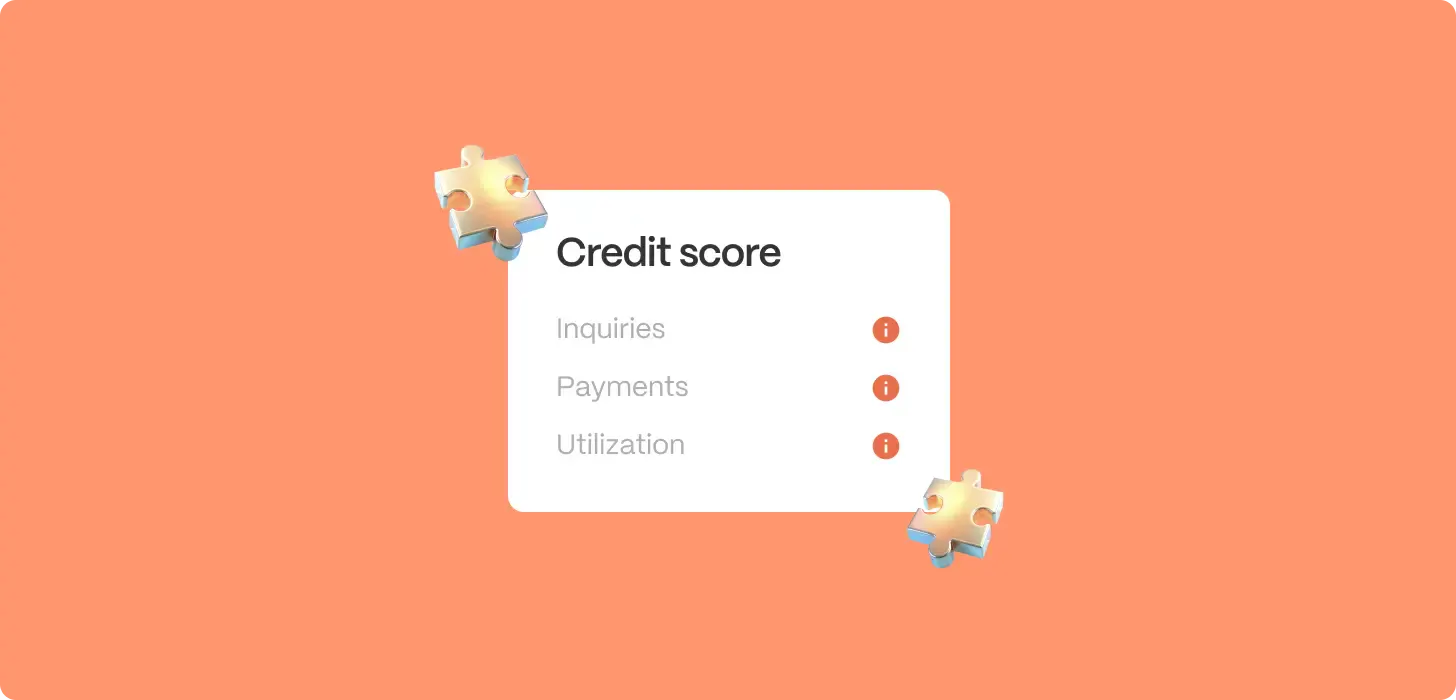
A personal loan doesn’t just add debt — it changes how your credit profile looks to lenders. Some of those changes happen right away; others play out over time. The effects break down into three categories:
Short-term effects
Applying for a loan usually triggers a hard inquiry, which may lower your score by a few points temporarily. Opening a new account also reduces your average account age, which may cause a small short-term dip.
Long-term effects
Over time, making on-time payments builds positive payment history — the single biggest factor in most credit scores. If you use the loan to pay off credit cards, your revolving credit utilization drops substantially, which often has an immediate positive effect on your score. Adding installment debt to a profile that previously only had revolving debt may also improve the credit mix.
Where things go wrong
Missed or late payments damage credit quickly. Defaulting on a personal loan can stay on your credit report for up to seven years. Always make sure the payment fits your budget before accepting the loan.
Questions to ask before taking a personal loan
Before you sign any loan agreement, run through these questions. They take five minutes and can save you from a bad decision. A few honest answers can separate a smart move from a costly mistake:
1. What exactly is the money for?
A vague answer — “bills,” “general expenses” — is a red flag.
2. Can I get the money cheaper elsewhere?
Compare the loan’s APR against savings, a 0% credit card offer, or a payment plan from the provider.
3. Does the payment fit my budget with a comfortable margin?
If a small income drop or an unexpected expense would break the budget, the loan is too large.
4. What’s the total cost?
Multiply the monthly payment by the number of months. Subtract the loan amount. That number is what you pay in interest and fees.
5. How does this loan affect my debt‑to‑income ratio?
If adding the payment pushes your DTI above 40%, the terms may be too tight.
6. Do I have a plan to avoid borrowing again right after this one?
If the same situation repeats, a loan alone won’t fix it.
Alternatives to consider before borrowing
A personal loan is one tool among many. Sometimes it’s the right one; often it’s not. Before you borrow, run through these other options:
1. Using savings you already have.
Paying with cash costs no interest and adds no monthly payment. Draining your emergency fund for a want is unwise, but for a genuine need, savings are almost always cheaper than a loan.
2. Waiting and saving.
If the expense isn’t urgent, saving for a few months costs nothing. Borrowing against a future paycheck means paying interest on money you could have set aside.
3. A 0% APR credit card.
For spending you can pay off within the promotional window (often 12 to 18 months), a 0% card beats a personal loan. Miss the window, and deferred interest can spike, so this works only with a clear plan.
4. Payment plan directly from the provider.
Medical bills, large purchases, and even some contractors offer installment plans with low or no interest. Ask before you sign a loan.
5. Borrowing from family or friends.
Not everyone has this option, but when available, it’s usually the cheapest and most flexible. Keep the arrangement clear to avoid damaging the relationship.
If none of these work, a personal loan may be the right answer. But starting with alternatives ensures you’re not borrowing because it’s the first option, only because it’s the best one left. If you’re leaning toward a personal loan but want to understand how unsecured products work, our article on unsecured personal loans explains rates, requirements, and risks.
Where Pennie Financial Fits
Pennie Financial is a marketplace that helps consumers compare personal loan options from multiple lenders in one place. Rather than telling borrowers whether taking out a loan is the “right” decision, Pennie is designed to help people better understand the terms they may qualify for so they can compare borrowing against other options realistically.
Users can go through how Pennie Works to check indicative offers with a soft credit inquiry that does not affect their credit score. Qualified borrowers may see rates starting as low as 5.99% APR, allowing them to evaluate potential monthly payments and total borrowing costs before deciding whether a personal loan makes sense for their situation.

Final takeaway
A personal loan by itself isn’t good or bad. The same product can help one person climb out of credit card debt and bury another in payments they can’t handle. What matters is what you borrow, at what rate, and whether the monthly payment actually fits your budget.
Use a loan to replace more expensive debt or cover a real need, and it can work in your favor. Use it to fund spending you can’t afford, or ignore the total cost, and it will cost you. The nuance isn’t marketing fluff — it’s the difference between a loan that helps and one that hurts.
Frequently Asked Questions
Are personal loans a bad idea?
Not inherently. Personal loans can be a useful financial tool or a harmful one, depending on how they’re used. They tend to work well for consolidating more expensive debt, funding necessary one-time expenses, or replacing higher-cost credit.
Is it bad to have a personal loan on your credit report?
No. A personal loan on your credit report with a history of on-time payments usually helps your credit profile.
Does a personal loan hurt your credit score?
It may cause a small temporary dip when you apply and open the account, but paying it on time generally helps your score over time.
Are personal loans worse than credit cards?
Personal loans often have lower rates and fixed terms that force actual payoff. Credit cards offer more flexibility but typically carry higher rates and minimum payment structures that extend repayment for years.
How much personal loan debt is too much?
There’s no universal number. Most lenders and financial advisors look at the debt-to-income ratio (total monthly debt payments divided by gross monthly income). If adding a new loan pushes your DTI above roughly 40% to 45%, it’s usually a sign that the payment may not fit comfortably.
Should I get a personal loan to pay off credit card debt?
Possibly — if the loan rate is meaningfully lower than your card rates, the new payment fits your budget, and you have a plan to avoid running the cards back up.
What's a reasonable interest rate on a personal loan?
Rates vary based on credit profile, income, and other factors. Strong-credit borrowers may see rates starting as low as 5.99% APR.
Get loan offers in as little as 60 seconds
You deserve options. So we built an industry leading platform to compete for your business.

Loans up to $250,000
APR starting at 5.99%
Repayment terms up to 10 years
Your info is never sold