
Find the help you need for any problem
- Debt basics
- Personal loans
- Rates, fees & APR
- Credit score & eligibility
- Repayment & loan payments
- Loan application
- Debt consolidation
- All articles
Personal Loan vs Credit Card: Which Option Makes More Sense?

Personal loans and credit cards are both ways to borrow money, but they work very differently. A personal loan gives you a lump sum upfront, which you repay in fixed monthly installments over a set period — typically two to seven years. A credit card gives you a revolving line of credit. You can borrow, repay, and borrow again up to your limit, and you only pay interest on what you actually carry from month to month. That’s the core difference: installment debt versus revolving debt.
A personal loan shines when you need a specific amount for a large one-time expense and wants predictable payments. A credit card works best for everyday spending, short-term borrowing, or when you can pay the balance in full each month and avoid interest altogether. Which one makes sense for you depends on what you’re trying to do, how disciplined you are with spending, and whether you prefer structure or flexibility. This guide breaks down the trade-offs so you can decide based on your situation.
In this article:
- Personal loan vs credit card—key differences
- What is a Personal Loan?
- What is a Credit Card?
- Pros and Cons of a Personal Loan
- Pros and Cons of a Credit Card
- When a Personal Loan May Make More Sense
- When a Credit Card May Make More Sense
- How Each Option Affects Your Credit Score
- Risks and Considerations
- Where Pennie Financial Fits
- Final Thoughts
- Frequently Asked Questions
Personal loan vs credit card—key differences
Before looking at the details, it helps to see how these two borrowing options line up side by side. The table below highlights the main differences — from how each loan is structured to the costs and flexibility you can expect. A quick overview of the key features looks like this:
| Aspect | Personal Loan | Credit Card |
|---|---|---|
| Structure | Lump sum, fixed term | Revolving credit line |
| Interest Rates | Fixed APR (typically 6–36%) | Variable APR (typically 15–29%) |
| Repayment | Fixed monthly payments, set end date | Minimum payment or pay in full each month |
| Flexibility | Limited—borrowed amount is fixed | High—borrow only what you need, up to limit |
| Fees | Origination fee (0–8%), possible prepayment penalty | Annual fee (usually $0–$500), late fees |
| Best for | Large one-time expenses, debt consolidation, predictable budgets | Ongoing purchases, building credit, short-term flexibility |
What Is a Personal Loan?
A personal loan is an unsecured installment loan. You borrow a specific amount, receive it as a lump sum (usually within 1–5 business days), and repay it over a fixed term with fixed monthly payments.
The interest rate is fixed when you apply, so you know your exact cost upfront. Loan terms typically range from 2 to 7 years. Most personal loans charge an origination fee (the cost to process and fund the loan), which ranges from 0% to 8% of the loan amount and is deducted from the funds you receive.
You cannot reborrow from a personal loan the way you can with a credit card. Once you pay it off, the account closes, and you’d need to apply for a new loan if you wanted to borrow again.
What is a Credit Card?
A credit card is a revolving line of credit issued by a bank or credit card company. You’re approved for a maximum credit limit, and you can borrow up to that limit as many times as you want.
You pay interest only on the balance you carry — not on your available credit. If you pay your full statement balance by the due date, you pay no interest at all. If you carry a balance, the card issuer charges interest at the card’s APR, calculated daily on your outstanding balance.
You make a minimum payment each month (usually 1–3% of your balance), but you can pay more if you choose. The more you pay toward your balance, the less interest accrues. Credit cards are designed for flexibility and repeated use.
Pros and Cons of a Personal Loan
A personal loan offers predictability and a clear payoff timeline, but it’s not the right fit for every situation. The trade-offs are straightforward once you lay them out.
Pros
You know your exact monthly cost for the life of the loan, which makes budgeting straightforward. No surprise interest charges if rates spike.
For large one-time expenses — say, a $10,000 wedding or roof repair — a personal loan lets you structure the payoff upfront and actually get it done.
Personal loan APRs typically range from 6–36%, compared to credit cards at 15–29%. Rates vary based on your credit score and income, but if you qualify for a mid-range personal loan rate (say, 12–18%), you’ll likely come out ahead of carrying a high-interest credit card balance.
One payment beats juggling multiple cards. That simplicity matters more than people expect.
Cons
Origination fees are real. A $10,000 loan with a 5% origination fee means you're paying $500 upfront, and the lender deducts it from what you receive. This cost gets baked into the APR.
You lose flexibility if your circumstances change. Some lenders charge prepayment penalties if you pay off early. Even without penalties, you can't pause a personal loan payment the way you can just stop spending on a credit card.
Getting approved is harder if your credit is weak. Personal loan lenders have stricter criteria than credit card companies. If your credit score is below 580, your options narrow significantly.
Those are the main trade-offs. If you want to know what lenders typically look for — from credit scores to income documents — check our guide on personal loan requirements and eligibility. Not all personal loans work the same way. The main variations — secured, unsecured, fixed-rate, and more — are explained in our guide on types of personal loans.
Pros and Cons of a Credit Card
A credit card gives you flexibility and a chance to pay nothing in interest if you play it right. But that same flexibility can get expensive fast when you carry a balance.
Pros
If you pay the full balance by the due date, you pay zero interest. None. This is genuinely the hidden strength of credit cards, and it's easy to overlook.
You borrow only what you use. $50 one month, $5,000 the next. No new application needed. That flexibility matters.
Many cards offer cash back or travel points tied to your spending. Personal loans offer nothing comparable.
Credit card issuers report to the bureaus regularly, so on-time payments build credit history faster than a personal loan would.
Cons
The psychological gap between swiping a card and spending cash is measurable. Research consistently shows people spend more on credit than they do with cash or debit.
A $5,000 balance at 20% APR costs $100 per month in interest before you touch the principal. That gets expensive fast.
Minimum payments are designed to keep you paying interest for years. If you only make minimums on a $5,000 balance at 20% APR, you're looking at 28 months to pay it off and nearly $1,500 in interest.
Premium cards charge $500+ annually. Miss a payment and you face a $25–$35 late fee plus a rate increase.
When a Personal Loan May Make More Sense
A personal loan works well when you need a specific amount of money upfront and want predictable payments over time. Debt consolidation is the most common example — combining multiple credit card balances into one loan with a fixed rate and a clear payoff date. It also fits large one-time expenses like home repairs, weddings, or medical bills where you know the total cost ahead of time. Not sure whether a HELOC or a personal loan fits you better? Our guide on HELOC vs personal loan breaks down the differences.
Say you have three credit cards totaling $8,000 at APRs between 18% and 24%. You’re paying $280 a month in minimum payments, but most of that goes to interest. A personal loan at 12% APR for five years gives you one monthly payment of about $190 and a fixed end date. You close the credit cards or stop using them, and the debt actually goes away instead of lingering for years.
If you’re deciding between these two approaches, our comparison of debt consolidation and personal loans walks through the trade-offs.
When a Credit Card May Make More Sense
A credit card shines when you want flexibility and don’t plan to carry a balance from month to month. It’s ideal for everyday spending — groceries, gas, dining, subscriptions — where the amounts vary and you can pay the full statement balance by the due date. You pay zero interest, and if your card offers cash back or travel points, you actually come out ahead.
See how that works in practice. You charge roughly $2,000 a month across a few cards and pay the balance in full every month. You’re not paying any interest, and you’re not building up debt. Just $480 a year in cash back at 2%. A personal loan would make zero sense here — you’d be paying interest on money you don’t need to borrow. The credit card is doing exactly what it's supposed to do.
How Each Option Affects Your Credit Score
A personal loan and a credit card affect your credit score differently. The main difference comes down to utilization.
Credit cards have a utilization ratio — the percentage of your credit limit you’re using. This makes up roughly 30% of your score. If you have a $5,000 limit and a $2,500 balance, you’re at 50% utilization. Higher utilization drags your score down. Carrying a balance actively hurts you, even if you make on-time payments.
Personal loans don’t have a utilization ratio at all. They don’t directly impact that part of your score. But they do add to your total debt, which lenders see when you apply for credit.
Payment history is the biggest factor for both — 35% of your score. A missed payment on either product can drop your score by 100 points or more. Each application also triggers a hard inquiry, which temporarily lowers your score by a few points.
So here’s the cause and effect. If you’re carrying credit card debt, moving it to a personal loan can improve your score by lowering your utilization. If you’re using cards responsibly and paying in full, a new personal loan might cause a small short-term dip but won't hurt you long-term.
Risks and Considerations
Credit cards and personal loans come with different kinds of risk. Knowing what they are helps you avoid the traps that catch people off guard. Three risks in particular are worth understanding before you borrow.
High Interest on Credit Cards
Carrying a balance on a credit card gets expensive fast. At 20% APR, a $5,000 balance costs you about $100 a month in interest before you pay down a single dollar of principal. Make only minimum payments, and you’re looking at years of interest charges — nearly $1,500 extra on that same $5,000 over 28 months. The real-world implication: what feels like a manageable monthly payment can turn into a multi-year drag on your finances.
Fixed Obligation on Personal Loans
A personal loan doesn’t care if you lose your job or face an emergency. You owe the same payment every month until it’s paid off. Miss enough payments, and the lender can send you to collections, sue you, or garnish your wages. The flexibility you lose compared to a credit card — where you can just stop spending — is a real trade-off. Before taking a personal loan, ask yourself whether you can handle that fixed payment even if your income takes a hit.
Overspending Risk
The psychology of credit cards is real. Swiping a card doesn’t feel like spending cash, and research consistently shows people spend more when using plastic. That $2,000 vacation feels affordable at 0% interest until the promotional period ends and you’re hit with 22% APR on the remaining balance. The real-world outcome: thousands of dollars in extra interest for things you wouldn’t have bought with cash. Personal loans avoid this trap because you get a lump sum and that's it — but they also don’t stop you from running up cards on the side.
Where Pennie Financial Fits
Pennie Financial focuses specifically on personal loans, not credit cards. Credit cards are a separate category managed by card issuers rather than traditional lenders. If a personal loan is the right tool for what you need, Pennie helps you find it.
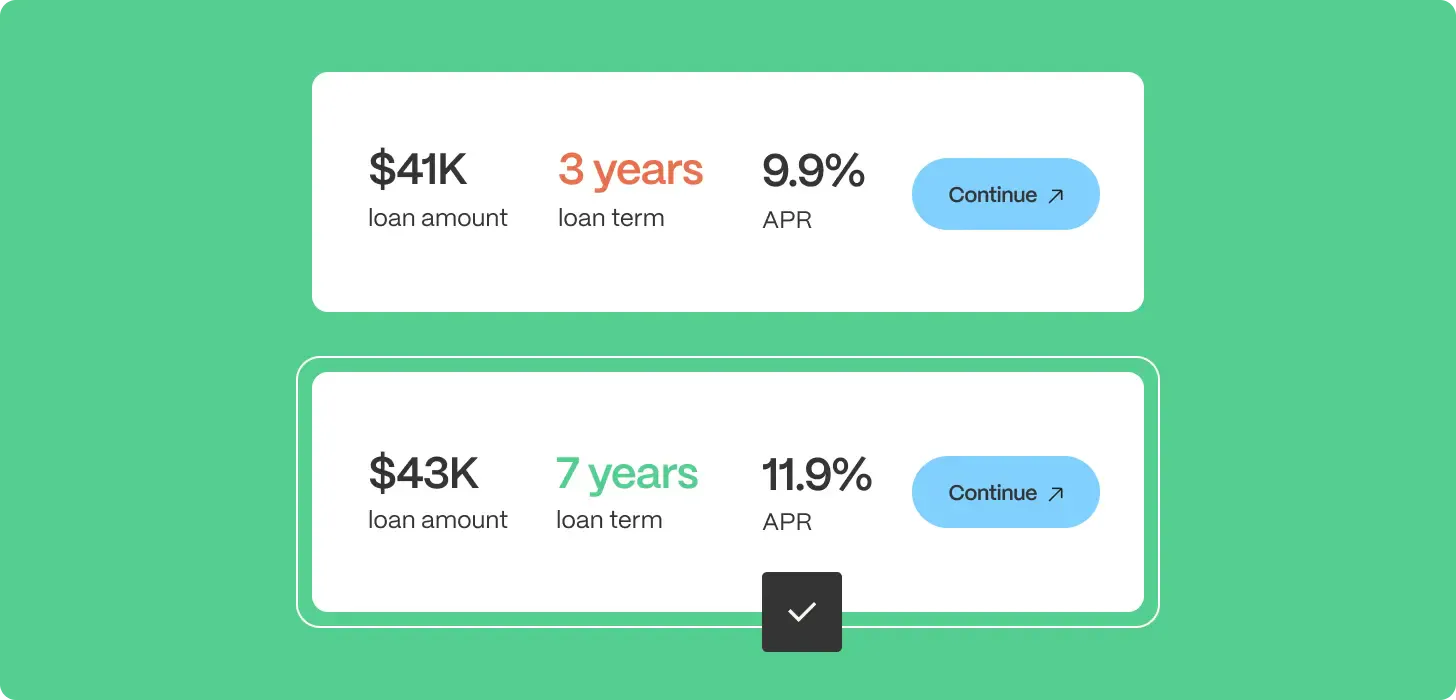
Instead of applying to banks one at a time, you submit one application through Pennie. The platform connects you with multiple lenders from its network, and you see their offers side by side — loan amount, APR, monthly payment, and term. That makes it easier to compare before you commit. You can get started on the personal loans page, see the how Pennie works section for the matching details, or just visit the main page for an overview.
If you’re wondering which lenders consistently rate well, our guide on best personal loans covers that.


Final Thoughts
The choice between a personal loan and a credit card depends on your specific needs. Neither is universally better. A personal loan makes sense when you need to borrow a specific amount, want fixed monthly payments, and plan to pay back the debt over time. A credit card makes sense when you want flexibility, plan to pay your balance in full, or are building credit history.
The best approach is to understand the trade-offs, match the product to your goal, and use it responsibly. And remember: the cheapest debt is the debt you don’t take on.
Frequently Asked Questions
Is a personal loan or credit card better for large expenses?
For large one-time expenses—like a home repair, car purchase, down payment, or wedding—a personal loan is typically better. You’ll borrow the exact amount you need, lock in a fixed rate and repayment term, and know your monthly cost upfront. A credit card could work if you can pay off the full balance within a month or two, but carrying a large balance on a credit card is expensive because interest compounds daily.
Should I pay off my credit card with a personal loan?
This depends on your card’s APR and the personal loan rate you qualify for. If you're carrying a balance at 20% APR and can get a personal loan at 12% APR, consolidating could save you money. However, consolidation only works if you don't rack up new credit card debt after paying off the cards.
Do personal loans have lower interest rates than credit cards?
On average, yes. Personal loan APRs typically range from 6–36%, while credit card APRs typically range from 15–29%. Your actual rate depends on your overall financial profile, income, debt-to-income ratio, and the lender.
Which option hurts your credit less?
A hard inquiry for either product temporarily drops your score by a few points. But the long-term impact differs. If you have credit card debt, a personal loan can actually improve your score by reducing your utilization ratio. If you have no existing debt, a new personal loan might slightly hurt your score in the short term by increasing your total debt load, but the impact is usually small. The bigger factor is payment history. Making all payments on time—whether on a personal loan or credit card—is what matters most for your credit score.
When should you avoid credit card borrowing?
Avoid carrying a credit card balance unless you have a concrete payoff plan. Minimum payments keep you in debt for years while you pay thousands in interest. If you can’t pay off what you charge within 1–2 months, either use a personal loan or don’t charge it.
What's easier to manage — a personal loan or credit card?
A personal loan is easier to manage if you want simplicity. One fixed payment, one due date, one end date. A credit card is easier to manage if you want flexibility and you're disciplined enough to pay in full monthly.
Get loan offers in as little as 60 seconds
You deserve options. So we built an industry leading platform to compete for your business.

Loans up to $250,000
APR starting at 5.99%
Repayment terms up to 10 years
Your info is never sold