
Find the help you need for any problem
- Debt basics
- Personal loans
- Rates, fees & APR
- Credit score & eligibility
- Repayment & loan payments
- Loan application
- Debt consolidation
- All articles
Personal Loans After Bankruptcy: When You Can Apply and What to Expect

Getting a personal loan after bankruptcy isn’t impossible — but it’s never the easy path. Timing, credit rebuilding, and steady income make the difference between a fast approval and a long string of declines. Bankruptcy leaves a heavy mark on your credit history and makes lenders nervous. They see you as a bigger risk, at least for a while. That translates into higher interest rates, tighter rules, and fewer people willing to lend, especially in the first months after your discharge.
The picture changes over time. As your discharge ages and you stack up small wins — on‑time payments on a secured card, a steady job — the pool of potential lenders grows, and the terms improve. This guide covers when you can realistically apply, how Chapter 7 and Chapter 13 look through a lender’s eyes, and what actually matters when they evaluate a post‑bankruptcy application.
In this article:
- Can you get a personal loan after bankruptcy?
- How bankruptcy affects your ability to borrow
- Chapter 7 vs Chapter 13 — what's the difference for borrowers
- When can you apply for a personal loan after bankruptcy
- What lenders typically look for after bankruptcy
- Loan options that may be available after bankruptcy
- Risks and trade-offs to consider
- How to improve your chances of approval
- Alternatives if you can't qualify yet
- Where Pennie Financial fits
- Final takeaway
- Frequently Asked Questions
Can you get a personal loan after bankruptcy?
Yes, but approval depends on timing, your credit profile, and lender criteria. In the first few months after a Chapter 7 discharge or during an active Chapter 13 plan, the lender pool is small, and the offers that exist tend to carry high rates and tight limits.
As time passes and you demonstrate stable income and rebuilding credit, the pool widens. It’s common for borrowers a year or two past discharge to qualify for mainstream personal loans, though usually at rates higher than they would have received pre-bankruptcy.
Early-stage borrowing is hardest because lenders weigh recent bankruptcy heavily in their risk models. That’s not permanent — it’s a timing issue more than a disqualifier.
How bankruptcy affects your ability to borrow
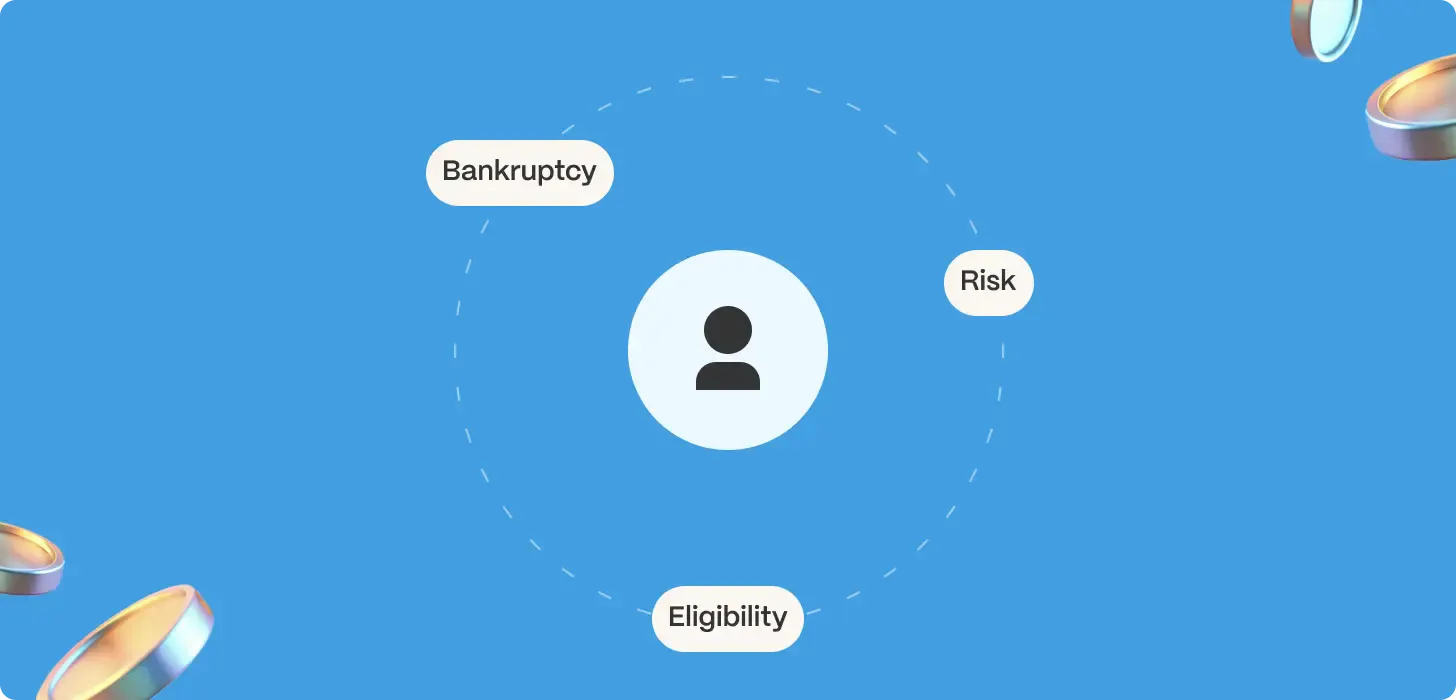
Filing for bankruptcy doesn’t just change your credit score. It shifts how lenders view you and what products you can even apply for. The effects break down into three connected areas:
Credit score
A bankruptcy filing typically causes a significant credit score drop — often 100 to 200 points, depending on where your score started. The filing appears on your credit report for seven (Chapter 13) to ten (Chapter 7) years, though its impact on your score lessens over time as it ages. If you want to understand exactly how that number is calculated in the first place, our guide on what a credit score is and how it works covers the mechanics.
Lender risk perception
Lenders use bankruptcy as a signal that the applicant has been through serious financial difficulty. That signal fades but doesn’t vanish instantly. Lenders want to see what you’ve done since — income stability, new positive tradelines, a lower debt load — before extending new credit.
Product availability
Many mainstream lenders have waiting periods after bankruptcy before they’ll even consider an application. These vary by lender and by loan type. Some won’t approve any application until at least 12 months after discharge; others have longer minimums.
Chapter 7 vs Chapter 13 — what's the difference for borrowers
Lenders don’t look at a Chapter 7 bankruptcy the same way they look at a Chapter 13. The two chapters work very differently, and each sends a different signal to a potential lender. Understanding the difference helps you know what to expect and which timeline you’re actually working with.
Chapter 7 discharges most unsecured debt in a few months. After discharge, the filing stays on your credit report for ten years. From a lender’s view, you’ve had debt eliminated, but don’t have an active repayment plan in place.
Lenders generally wait until discharge is complete before approving a new personal loan, and many prefer at least 12 months of post-discharge history.
Chapter 13 involves a court-approved repayment plan, typically lasting three to five years. During the plan, you’re actively paying down debt under court supervision. Borrowing during a Chapter 13 is heavily restricted — you generally need court approval for new debt.
After plan completion and discharge, the filing stays on your report for seven years. Some lenders will consider applications during the plan (with court approval); most prefer to wait until discharge.
Lender treatment often reflects a practical view: a Chapter 13 borrower who completed a repayment plan has a track record of making payments under supervision, which can be a positive signal.
A Chapter 7 filer has a cleaner current slate but no recent payment history on the bankruptcy docket. Neither is uniformly “better” from a lender’s perspective; they’re different profiles.
When can you apply for a personal loan after bankruptcy
Not every lender follows the same clock after a bankruptcy. Some will talk to you earlier than others, and loan terms vary wildly depending on how much time has passed. The general timeline breaks into rough phases, though expect significant variability:
During filing / pre-discharge
Very limited. Most lenders will not approve a new personal loan while a case is active. Chapter 13 borrowers often need court approval to take on new debt even when a lender is willing.
0 to 12 months post-discharge
Narrow pool of specialty lenders, typically at high rates and lower amounts. Secured options (backed by savings or vehicles) expand what's available. Most prime and near-prime lenders still say no.
1 to 2 years post-discharge
Expanding options. Borrowers with consistent income and new on-time tradelines (credit-builder loan, secured card) start qualifying with subprime and near-prime lenders at improving rates.
2 to 4 years post-discharge
Mainstream personal loans become more accessible. Rates still reflect the history on file but are often competitive enough to be useful. Credit score has typically recovered meaningfully by this point.
4+ years post-discharge
Access to most mainstream lenders. Rates approach what a non-bankruptcy borrower with equivalent current credit would see. The bankruptcy still shows on the report but has a much smaller effect.
These phases are rough. A borrower who rebuilds aggressively — stable income, multiple on-time accounts, low utilization — can compress the timeline. A borrower who runs into further credit trouble post-discharge can extend it.
What lenders typically look for after bankruptcy
Once a lender agrees to consider your application, they still need a reason to say yes. The bankruptcy is on the record, but it’s not the only thing they see. What you’ve done since the discharge matters as much — often more. For a full picture of how lenders build that evaluation, dig into our article on how to get approved for a loan and what lenders look for. Here are the four factors they weigh most heavily:
Income
Stable, verifiable income is the foundation. W-2 income with consistent pay stubs, or self-employment income documented through tax returns and bank statements. Rising income trends help.
Payment history since discharge
New tradelines reported since the bankruptcy — a credit-builder loan, a secured credit card, an auto loan paid on time — are the strongest positive signals available. A clean post-discharge record demonstrates the filing was a past event, not a current pattern.
Debt-to-income ratio
With debt discharged or being actively paid down, DTI is often lower than it was pre-bankruptcy, which works in the applicant's favor. Keeping it low and avoiding rapid new debt accumulation helps.
Credit rebuilding progress
Lenders look for evidence that the credit file is trending up — new accounts opened responsibly, scores recovering, and utilization staying reasonable. This often matters more than the absolute score value.
Loan options that may be available after bankruptcy
The loan types you can qualify for shift as time passes after a bankruptcy. Some options open up early but cost more; others take longer but offer better terms. The main categories break down like this:
Secured personal loans
Backed by cash collateral (savings or a CD) or a vehicle. Lower rates than unsecured post-bankruptcy products because the lender’s risk is bounded. Often, the most accessible early option.
Small unsecured loans from specialty lenders
Smaller amounts — typically under $5,000 — at high rates, available to borrowers with verified income even shortly after discharge. Useful in specific situations but carries a high total cost.
Credit union loans
Credit unions sometimes have more flexible post-bankruptcy criteria than banks, especially if you’ve been a member for some time or have an existing savings relationship.
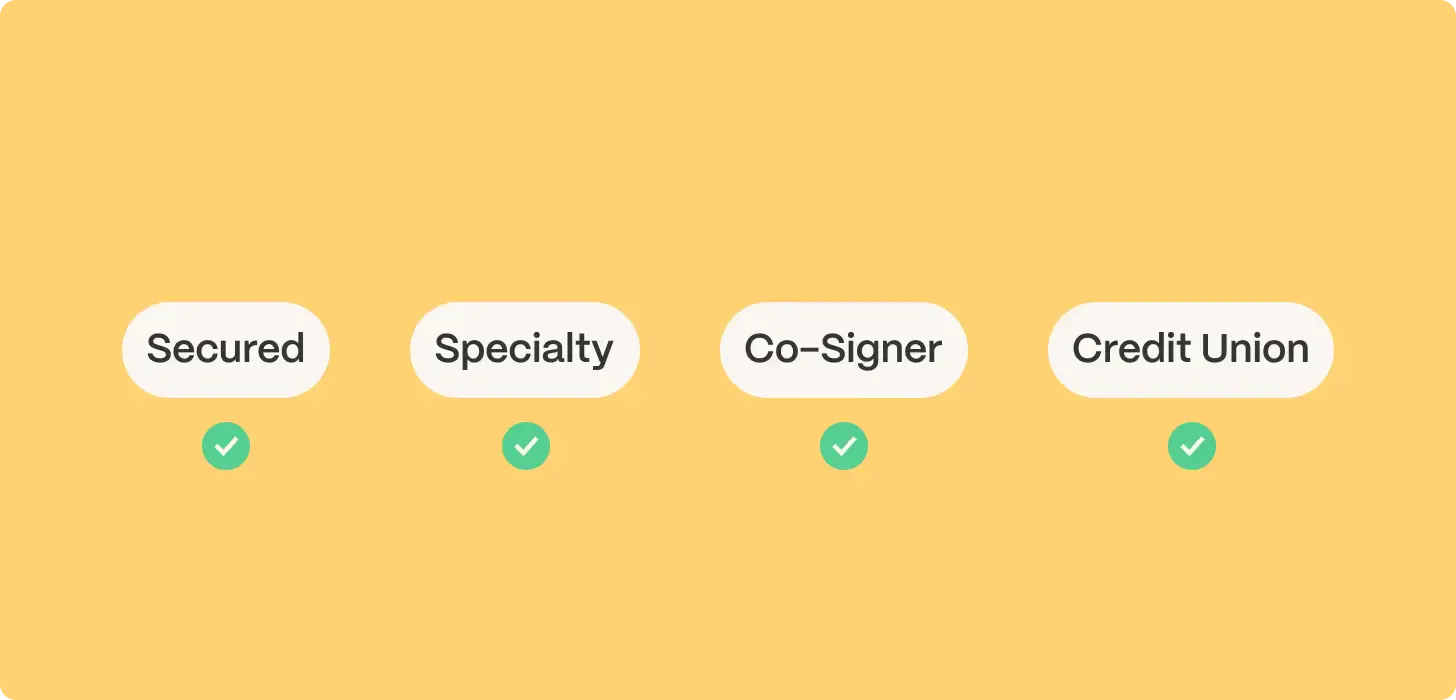
Co-signed loans
A co-signer with strong credit can make post-bankruptcy approval possible at meaningfully better rates. Co-signers take on full liability, which is a real commitment.
These options play out differently depending on your situation. A borrower three months after Chapter 7 discharge with a steady job might only qualify for a small secured loan.
Someone two years past discharge with a secured card and on‑time payments could step up to an unsecured specialty loan. Before you go that route, our guide on unsecured personal loans, rates, requirements, and risks is worth reading first. A Chapter 13 filer who finished a five‑year repayment plan might get a near‑mainstream rate from a credit union, especially with a co‑signer.
Not sure which product actually fits your situation? Our guide on the types of personal loans lays out the full landscape.
Risks and trade-offs to consider
Borrowing shortly after bankruptcy can help rebuild credit — but it also comes with genuine downsides. Knowing what they are before you sign makes the difference between a smart rebuilding move and a costly mistake. Here are the four biggest risks:
1. Higher APRs.
Lenders price risk into the rate. Post-bankruptcy loans, particularly early ones, come with APRs that make borrowing significantly more expensive per dollar than a standard personal loan would be.
2. Fees.
Origination fees and other charges are often higher on specialty products aimed at post-bankruptcy borrowers.
3. Debt spiral potential.
Borrowing to cover gaps when finances are still fragile can restart the cycle that led to bankruptcy in the first place. The hardest but often most important question is whether a new loan actually solves a problem or just delays a harder one.
4. Long-term credit impact.
New accounts opened immediately after discharge show up alongside the bankruptcy filing on the credit report. Missed payments on those accounts hit even harder than they normally would. If your score has already moved in an unexpected direction, our article on why your credit score may have dropped breaks down what’s behind it.
How to improve your chances of approval
There’s no magic reset button after bankruptcy. Approval takes time and small, consistent steps. For a broader roadmap beyond the post-bankruptcy context, our guide on how to improve your credit score is a solid next read.
What matters most is showing lenders a clean track record since your discharge. The following steps actually work:
- Open a secured credit card within a few months of discharge. Use it for small monthly bills and pay the balance in full.
- Keep your credit utilization below 30% on any revolving account. Lower is better.
- Make every single payment on time. A missed payment after bankruptcy resets the clock in a lender’s eyes.
- Stay at the same job and address if possible. Stability lowers perceived risk.
- Avoid opening multiple new accounts at once. Each new account adds a hard inquiry and lowers your average account age.
- Wait longer before applying. Time alone improves your file more than almost any single action.
Alternatives if you can’t qualify yet
A personal loan may still be out of reach, even after rebuilding steps. That doesn’t mean you’re stuck. Several options can fill the gap or build a stronger foundation later. What to try instead:
Secured credit cards
Available to almost anyone with a deposit. Use responsibility to build a history that unlocks better options later.
Credit-builder loans
Designed exactly for post-bankruptcy rebuilding. Funds sit in a locked account while you make payments; you get the proceeds at the end, plus a documented payment history on your credit report.
Waiting
Counterintuitive but often correct. Six to twelve more months of clean post-discharge activity changes, which lenders will approve you and at what rates. Borrowing at a bad rate now often costs more than the delay would.
Earmarked savings for near-term needs
When possible, saving incrementally for expected expenses avoids the compounded cost of high-rate post-bankruptcy borrowing.
Where Pennie Financial Fits
Rebuilding after bankruptcy means every application counts — stacking declines only adds hard inquiries to a file that's already taken a hit. Pennie Financial matches you with lending partners whose criteria align with your current profile, including some that work with post-bankruptcy borrowers.
Browse personal loan options and compare what you actually qualify for, rather than guessing blind. Approval and pricing depend on each lender's own post-bankruptcy criteria — Pennie narrows the field, and lenders make the call. Curious about the mechanics? Here’s how Pennie works.


Final takeaway
Borrowing after bankruptcy is possible, but timing and behavior between discharge and application matter enormously. In the first year, options are narrow and expensive. As you rebuild — on-time tradelines, stable income, careful utilization — the pool widens, and rates improve.
The best move for most borrowers is to treat the post-discharge period as active rebuilding rather than a waiting room, while being honest about whether a new loan is actually needed or just tempting. Time plus clean behavior does more for your future loan options than any application you could submit right now.
Frequently Asked Questions
How long after bankruptcy can you get a personal loan?
Sometimes, immediately after discharge from specialty lenders at high rates, more realistically, 12 to 24 months of post-discharge rebuilding puts you in reach of meaningfully better options. Mainstream lenders become more accessible after two to four years.
Can you get a loan before bankruptcy is discharged?
Very rarely for a Chapter 7, and only with court approval for a Chapter 13. Most lenders won’t consider an application until discharge is complete.
Do lenders treat Chapter 7 and Chapter 13 differently?
Yes. Chapter 7 stays on credit reports for ten years; Chapter 13 stays for seven. Some lenders see a completed Chapter 13 as evidence of disciplined repayment; others simply treat all recent bankruptcies the same. Treatment varies.
Why are interest rates higher after bankruptcy?
Lenders price the additional risk a recent bankruptcy represents. As the filing ages and new positive credit accumulates, rates available to the borrower typically improve.
What is the easiest loan to get after bankruptcy?
Secured personal loans — backed by savings, a CD, or a vehicle — are often the most accessible early-stage option because collateral reduces the lender’s risk. They also typically carry lower rates than unsecured specialty products.
Can rebuilding credit improve approval chances?
Substantially. New tradelines with clean payment history, low utilization, and consistent income are the clearest signal a lender can see. Most rebuilding progress is built over a 12 to 24-month window following discharge.
Get loan offers in as little as 60 seconds
You deserve options. So we built an industry leading platform to compete for your business.

Loans up to $250,000
APR starting at 5.99%
Repayment terms up to 10 years
Your info is never sold