
Find the help you need for any problem
- Debt basics
- Personal loans
- Rates, fees & APR
- Credit score & eligibility
- Repayment & loan payments
- Loan application
- Debt consolidation
- All articles
Does Cash Advance Hurt Your Credit Score?

When people borrow cash from a credit card, they often worry about the hit to their credit. The truth is more nuanced. That withdrawal won't show up as a special flag on your credit report — bureaus treat it as part of your regular card balance. So the direct answer to “Does a cash advance hurt your credit?” is no. But it can still move the levers that shape your score, and that’s where the real effect lives.
How much impact you see depends on what you do next. Take a small amount and pay it off before the billing cycle closes — it may leave almost no trace. Let a larger advance sit on the card for months, and you’ll likely push up your credit utilization, grow your outstanding balance, and increase the pressure on your monthly payment. Those are all factors that scoring models actually track.
This guide breaks down how cash advances interact with credit scoring, what they cost beyond the score, and when you might reasonably use one.
In this article:
- What is a cash advance?
- Do cash advances affect your credit score directly?
- How cash advances can indirectly affect your credit score
- What determines the actual impact
- Fees and costs of cash advances
- Other downsides of cash advances
- When a cash advance might make sense
- Alternatives to consider
- Where Pennie Financial fits
- Final takeaway
- Frequently Asked Questions
What is a cash advance?
A cash advance is money you borrow against your credit card’s line, but instead of swiping at a store, you’re pulling physical cash. That could mean an ATM withdrawal, a bank counter request, or one of those convenience checks the issuer mails you.
This isn’t the same as a regular purchase. The issuer treats it as a separate transaction, with its own APR, its own fee structure, and often a separate limit within the card. Most cards cap this kind of borrowing at 20% to 50% of your total credit line. If you need a refresher on credit scores themselves — what they are and how they’re built — see what a credit score is and how it works.
That structural split is where most credit-score side effects come from. The terms on this type of borrowing are less forgiving than those on regular purchases. It makes the debt more expensive per dollar and much harder to pay off once the money is drawn.
Do cash advances affect your credit score directly?
The credit reporting system doesn’t label cash advances as separate events. FICO and VantageScore have no line item for them either — they can’t penalise what they never see. What bureaus actually track is your total balance, utilisation, payment history, and account age. A cash advance changes some of those numbers. The transaction stays invisible, but the footprint isn’t.
That means a cash advance won’t hurt your credit on its own. What matters is what happens afterwards — how much you took, how long it sits on the card, and whether it makes your monthly payment harder to manage.


How cash advances can indirectly affect your credit score
Four mechanisms do the real work. Each one traces back to a factor that the scoring models actually measure. Let’s walk through how these mechanisms can affect your credit.
Increased credit utilization
Utilization is the percentage of your available credit you’re using right now. It’s one of the biggest inputs to your score, second only to payment history. Take a $500 cash advance on a card with a $2,000 limit, and your utilization jumps 25%. Most scoring models start penalizing utilization above 30%, and the penalty gets sharper as you push closer to the card’s limit.
Higher outstanding balance
Raw balance matters separately from the utilization ratio. A bigger balance means more interest accruing every month, which makes the balance harder to pay down — and harder-to-pay balances tend to stick around longer. The longer they stick, the more weight they carry in your utilization number each time your card reports to the bureaus.
Risk of missed payments
Cash advance APRs usually run higher than purchase APRs, and there’s no grace period — interest starts the day the advance posts. That can push your minimum payment up noticeably from one month to the next. If the new minimum catches you off guard and a payment is missed, your score can drop meaningfully — payment history is the single biggest scoring factor. A missed payment isn’t the only thing that can pull your score down. Our guide to a credit score drop explains what else to watch for.
Faster debt accumulation
Cash advances compound in the borrower's disfavor. Higher rate, no grace period, no interest-free buffer — every day the advance sits on the card, the balance climbs. What starts as $300 for an emergency can become $400 in a few months without a single new charge.
If you want to understand how lenders evaluate your whole financial picture, our guide on getting approved for a loan covers what they check beyond just your score.
What determines the actual impact
The effect of a cash advance on your credit isn’t the same in every situation. The damage depends on a few specific factors. Three variables decide how much of this actually shows up on your score:
- The size of the advance relative to your credit limit. A small advance on a large line barely moves utilization. A large advance on a small line can spike it overnight.
- Your utilization before the advance. If you were at 10% going in, an advance that pushes you to 40% is a different situation than if you were already at 60% and the advance takes you to 90%.
- How quickly you pay it back. A cash advance paid off within the same billing cycle may never appear on a statement that the bureaus see. One that lingers for months reshapes your utilization profile every time your card reports.
Once you know which factors are hurting you, our guide on improving your credit score shows you what to do next.
Fees and costs of cash advances
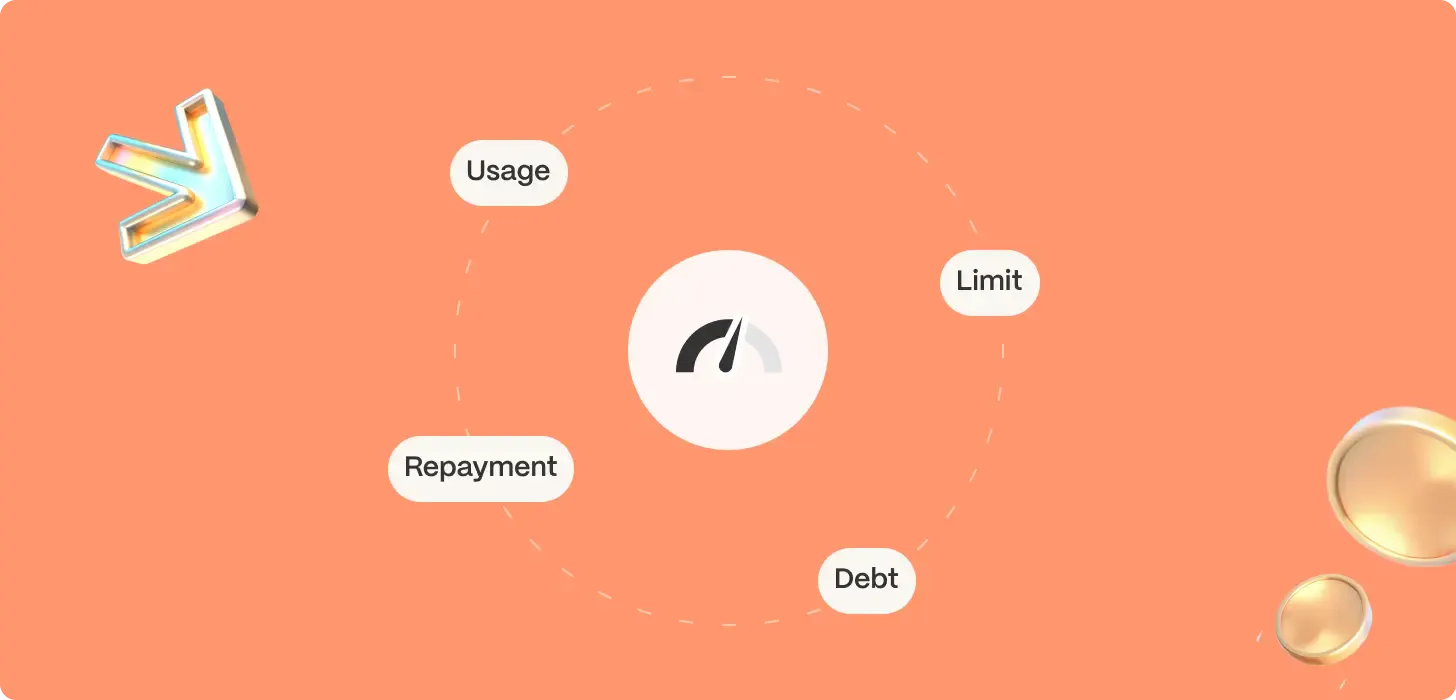
Interest and fees matter just as much as your credit score when you’re looking at a cash advance. These expenses add up in ways regular purchases don’t. The main costs break down into three categories.
Upfront transaction fee
Most issuers charge a cash advance fee of 3% to 5% of the amount withdrawn, with a minimum of around $10. That fee lands on your balance immediately, adding to the amount you’ll pay interest on.
Higher APR
The APR on cash advances is almost always higher than the purchase APR on the same card. Cash advance APRs usually sit well above what the same card charges for a normal swipe.
No grace period
With regular purchases, you typically have 20 to 30 days before interest begins — as long as you pay the statement balance in full each month. Cash advances skip that entirely. Interest starts the moment the transaction posts and compounds daily until the balance is gone.
Other downsides of cash advances
Beyond the direct fees and interest, cash advances come with a few less obvious drawbacks. Here are the main ones borrowers often overlook.
1. Cost compounds quickly.
Because interest accrues from day one at a higher rate, an untouched cash advance can grow faster than many people expect.
2. Harder to pay off than regular purchases.
Card issuers often apply your minimum payment to the lower‑APR balance first. That means your cash advance can keep growing even while you’re making payments, as long as you still have purchase balances on the card.
3. Can signal financial stress to lenders
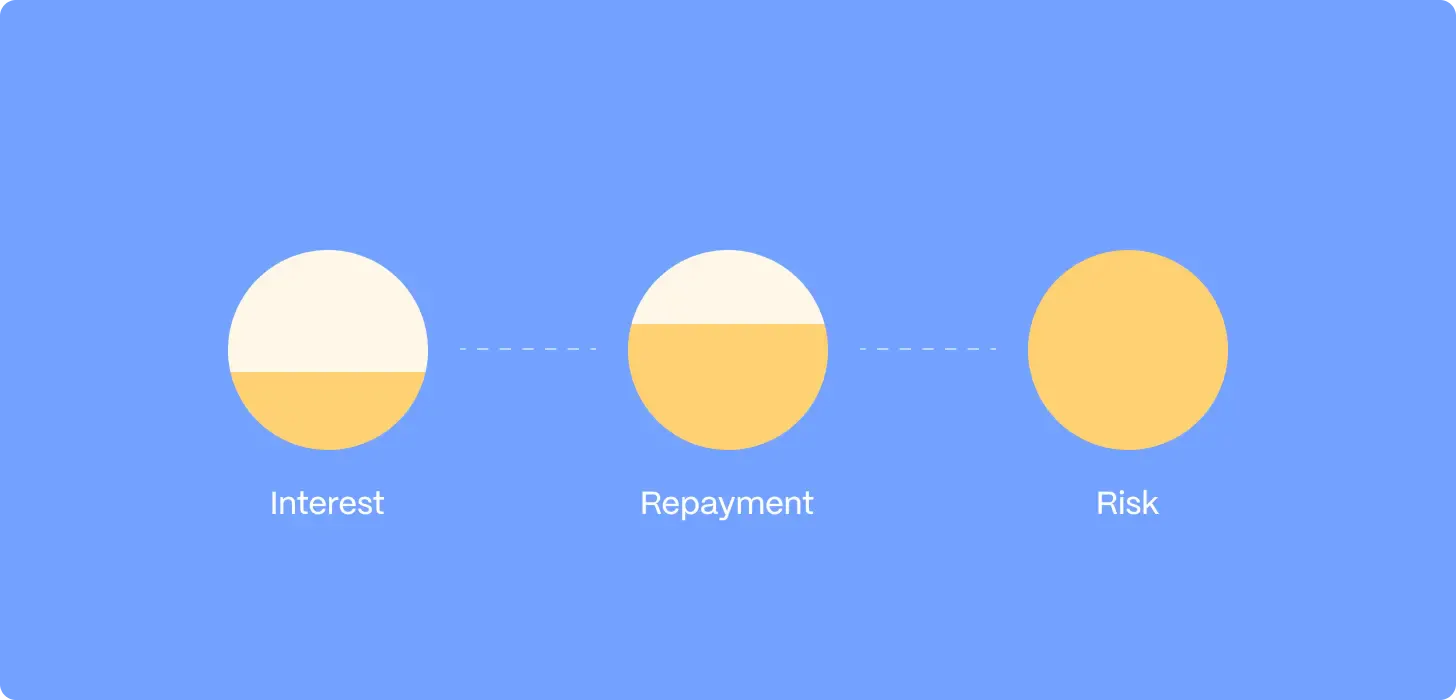
Cash advances don’t show up as a separate line on your credit report. But lenders who review account-level data may see repeated advances as a sign of cash pressure. That can affect how they view a future application.
When a cash advance might make sense
A cash advance isn’t something you should reach for lightly. It only makes sense when you truly need cash within hours, can’t find another way, and can pay it back in days.
Think of a road trip where your car breaks down. The mechanic takes only cash, and you have the money in checking — but no way to access it until Monday. That’s the rare case where a small advance you repay immediately could be reasonable.
Alternatives to consider
Before you turn to a cash advance, a few lower-cost paths are worth looking at:
- A personal loan. Fixed-rate, fixed-term borrowing with predictable monthly payments. Many online lenders fund approved loans within a day or two. Our guide on credit score for a personal loan explains what score you’ll need to qualify.
- A payment plan with the merchant or provider. Many medical providers, utility companies, and auto shops will split a bill into installments without interest if you ask directly.
- Savings or an emergency fund. Even a small buffer avoids the APR and fee structure of a cash advance entirely.
- Ask a family member or a trusted contact. Not a fit for everyone, but it skips all the cost layers of a formal credit transaction.
Cash advance vs personal loan
A cash advance might feel like the faster option when you need money right away. But looking at a personal loan side by side makes the real trade-offs clear:
| Cash advance | Personal loan | |
|---|---|---|
| Cost | Transaction fee plus higher APR plus daily compounding from day one | One fixed APR, no transaction fee on most loans, predictable interest |
| Structure | Revolving — stays on your credit card with no end date | Installment — fixed term, fixed end date |
| Predictability | Balance can grow if not paid quickly; minimum payments extend the timeline | Same payment every month until the loan is paid off |
Once you see how the costs compare, you’ll want to know where your own credit stands. Our guide on checking your credit score walks through the process.
Where Pennie Financial Fits
If you’re short on cash for something like an unexpected dental bill or a necessary home repair, a personal loan almost always costs less than a cash advance. Pennie Financial is a lending marketplace where you submit one application and see offers from multiple lenders. You don’t have to guess who might approve you — the platform does the matching based on your profile.
The entire process, from application to offers, is outlined in how Pennie performs. It uses a soft credit pull, so your score isn’t affected just by looking. Once you’re ready to compare, you can find current rates and terms under personal loan options.


Final takeaway
A cash advance won’t directly hurt your credit score. But it can push up your utilisation, add to your balance faster than expected, and raise your monthly payment. The real hit comes down to three things: how much you take, how much credit you have free, and how quickly you pay it back. For most people, a cash advance is more expensive than it’s worth. Before you pull cash from your credit card, check a personal loan first. You’ll likely pay back significantly less than with a cash advance.
Frequently Asked Questions
Do cash advances show up differently on your credit report?
No. Credit reports show the total balance on your credit card, not a breakdown by transaction type. A cash advance is part of the card balance the bureau sees, but it’s not flagged as a cash advance specifically.
Why don’t cash advances directly affect your credit score?
Because the scoring models — FICO and VantageScore — don’t receive cash advance information as its own data point. They work from the total balance, utilization, payment history, and account age that credit bureaus report.
Can a cash advance increase your credit utilization?
Yes. A cash advance adds to your credit card balance, which is the numerator in your utilization ratio. A large advance on a card with limited available credit can push utilization into a range that scoring models penalize more sharply.
How quickly should you repay a cash advance to avoid impact?
The cleanest approach is to repay it before your next statement closes. That keeps the advance off the balance the bureau sees in the reporting cycle and cuts off the interest that compounds daily starting from day one.
Are cash advances worse than regular credit card purchases?
For most borrowers, yes. Cash advances carry higher APRs, upfront transaction fees, and no grace period, so they cost more per dollar borrowed than regular purchases.
Can taking multiple cash advances affect your credit?
Yes — indirectly. Multiple advances compound the same utilization and balance-growth effects that a single advance creates. Patterns of frequent cash advances can also get noticed by lenders’ internal risk models when they evaluate future credit applications.
Do lenders view cash advances as risky behavior?
Some do. Cash advance patterns don’t appear on your credit report as a standalone factor, but lenders who review account-level data during underwriting may treat repeated cash advances as a signal of short-term liquidity pressure.
Get loan offers in as little as 60 seconds
You deserve options. So we built an industry leading platform to compete for your business.

Loans up to $250,000
APR starting at 5.99%
Repayment terms up to 10 years
Your info is never sold