Thinking about consolidating? Compare consolidation loan options across multiple lenders to see actual rates for your profile — before deciding whether the math works for your situation.

Find the help you need for any problem
Topics
Debt consolidation
- Debt basics
- Personal loans
- Rates, fees & APR
- Credit score & eligibility
- Repayment & loan payments
- Loan application
- Debt consolidation
- All articles
Ready to move forward?Get started
Debt Consolidation Pros and Cons: When It's a Good Idea

Most people who look into debt consolidation already know what it is. What they actually want to know is whether it will work for them. That answer lives in one number: the interest rate you can actually qualify for. If the new rate comes in lower than what you're stuck with now, consolidation starts to look like a real option. Anything else and you're paying for the privilege of having one fewer bill each month.
Debt consolidation means taking all your debts across multiple accounts and replacing them with a single loan and a single monthly payment. The total debt stays the same. What this guide breaks down is when that trade makes sense, when it doesn't, and what the real costs and benefits look like either way.
In this article:
- What Is Debt Consolidation?
- Pros and Cons at a Glance
- Benefits of Debt Consolidation
- Drawbacks of Debt Consolidation
- When Debt Consolidation Makes Sense
- When Debt Consolidation May Not Be a Good Idea
- Alternatives to Debt Consolidation
- Final Thoughts
- Frequently Asked Questions
What Is Debt Consolidation?
Juggling multiple creditors is exhausting. Different deadlines, different rates, different balances, all competing for your attention at once. Consolidation solves that specific problem. One loan replaces everything, and from that point on, there is only one payment to think about. The total you owe stays exactly the same. What consolidation actually buys you is clarity.
How you consolidate depends on your situation:
- Personal loans. You take a specific amount, the rate gets locked in, and you chip away at it until it's gone on a set schedule. The monthly payment never changes, and you don't need to put anything up as collateral.
- Balance transfer credit cards. You shift what you owe onto a card that charges no interest for an introductory period, typically somewhere between 12 and 21 months. The catch is the deadline. Miss it, and the rate that kicks in can wipe out everything you saved.
- Home equity loans or HELOCs. The rates are attractive, but the stakes are about as high as they get. You're borrowing against your home, which means falling behind on payments stops being a financial inconvenience and becomes a housing crisis. Only makes sense if your equity is real and your income is something you can actually count on.
Pros and Cons at a Glance
Consolidation has real advantages, but they come with conditions attached, and those conditions matter. Here is what you are actually weighing:
Pros
Single monthly payment replaces multiple
Potentially lower interest rate
Fixed end date for repayment
Easier to budget around one payment
Can improve the credit utilization ratio
On-time payments support credit building
Cons
Doesn't reduce the total amount owed
Origination fees increase the total cost
Longer term can increase total interest paid
Qualification requires adequate credit and income
Risk of accumulating new debt on cleared cards
Secured consolidation puts collateral at risk
Benefits of Debt Consolidation
The benefits of debt consolidation are real, but they are not automatic. You only see those benefits when the conditions line up, and the numbers actually tilt in your direction. Understanding what benefits look like in practice is the only way to know whether consolidation is genuinely worth pursuing in your situation.
Simplified Monthly Payments
Managing four or five minimum payments across different accounts creates real cognitive overhead and increases the chance of a missed payment. Consolidation reduces that to one payment on one account. It's easier to track, easier to automate, and harder to miss.
Potentially Lower Interest Rates
Whether consolidation makes financial sense comes down to one thing: the numbers have to work. If your existing debts carry an average blended rate of 22% and you can consolidate into a personal loan at 13%, the interest savings over a multi-year repayment period are substantial. That 13% figure represents a realistic mid-range scenario for borrowers with good credit — rates vary by lender and borrower profile, and the rate you're offered depends on your specific application.
Faster Debt Payoff (In Some Cases)
If you redirect the money saved on interest toward the principal, consolidation can accelerate payoff. This requires intentionality — the savings aren't automatic. A lower rate only translates to faster payoff if you maintain or increase your payment amount rather than reducing what you pay monthly.
Improved Budgeting Clarity
A single fixed payment with a defined end date makes planning significantly easier. You know exactly what you owe each month and exactly when the debt ends. That predictability makes it easier to set savings goals, manage cash flow, and avoid the chronic uncertainty that comes with minimum payment math on revolving balances.
Drawbacks of Debt Consolidation
Every financial tool has a flip side, and consolidation is no exception. Knowing where it can go wrong is just as important as knowing where it can help.
Fees and Closing Costs
Origination fees typically run 1–8% of the loan amount. A 5% origination fee on a $20,000 consolidation loan adds $1,000 to your cost upfront. Balance transfer cards charge transfer fees, usually 3–5% of the transferred balance. These fees reduce or eliminate the interest savings in some scenarios.
Risk of Longer Repayment Periods
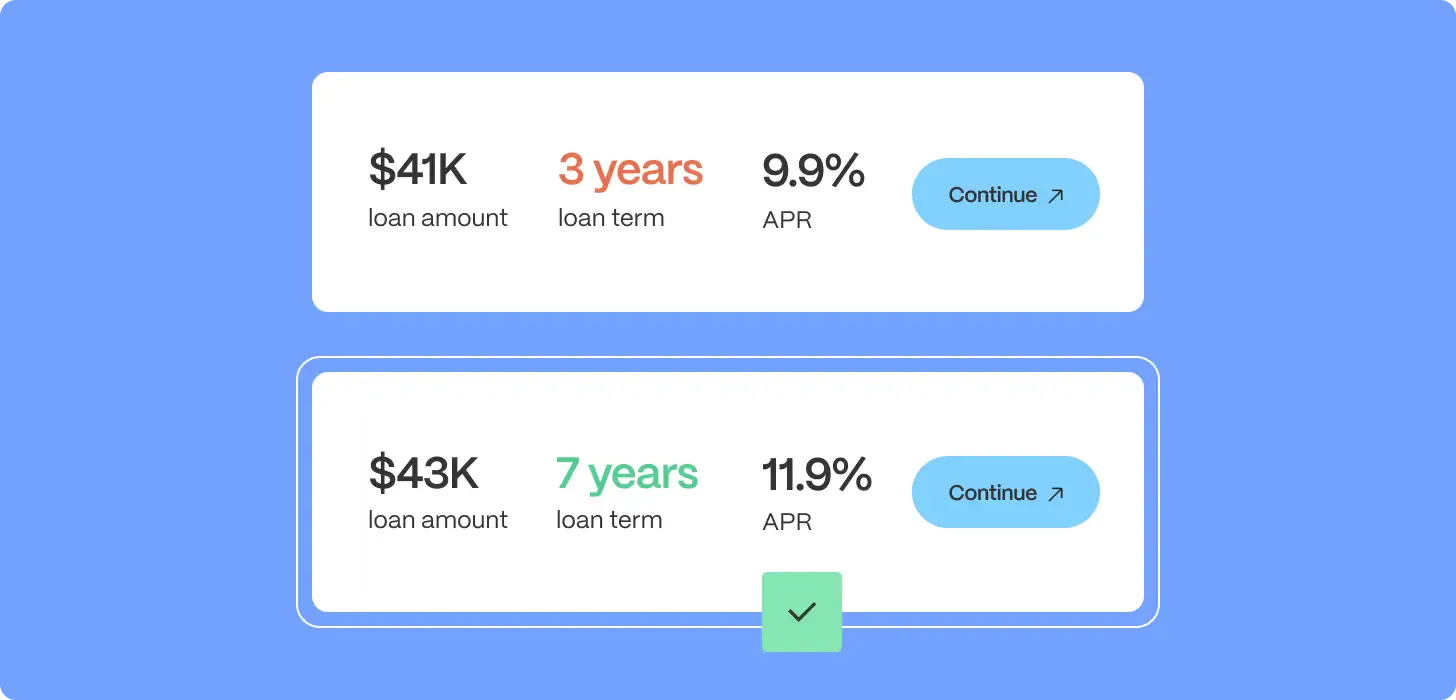
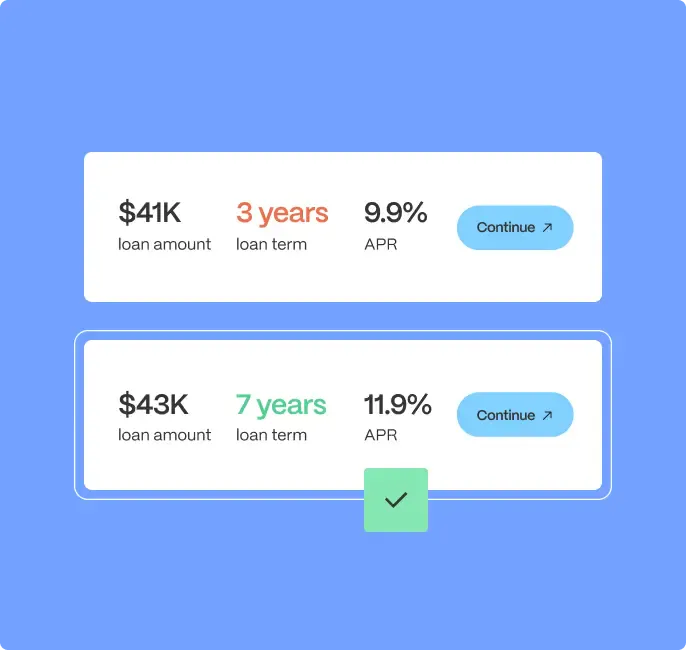
A lower monthly payment sounds good. The catch is that lower payments usually come from extending the repayment term. A longer term means more total interest paid, even at a lower rate. Running a $15,000 balance at 20% for 36 months versus 60 months on a 14% personal loan: the monthly payment is lower in scenario two, but the total interest is higher. Check both numbers before committing to a term.
Qualification Requirements
A consolidation loan only helps if you qualify for a rate that actually improves your situation. Lenders look at three things: your credit score, your income, and how much debt you're already carrying relative to what you earn. Borrowers with fair or poor credit may find that the available rate isn't low enough to justify the consolidation. Exploring consolidation loan options across multiple lenders — on your own or with a service like Pennie Financial — helps you see the realistic rate range for your profile.
Risk of Accumulating New Debt
Paying off credit card balances with a consolidation loan increases available credit. However, for borrowers who haven't addressed the spending habits that created the debt in the first place, that available credit can be dangerous. The cards get loaded up again. The consolidation loan is still there.
When Debt Consolidation Makes Sense
Consolidation only makes sense under the right conditions. Here's how that plays out when you look at real situations:
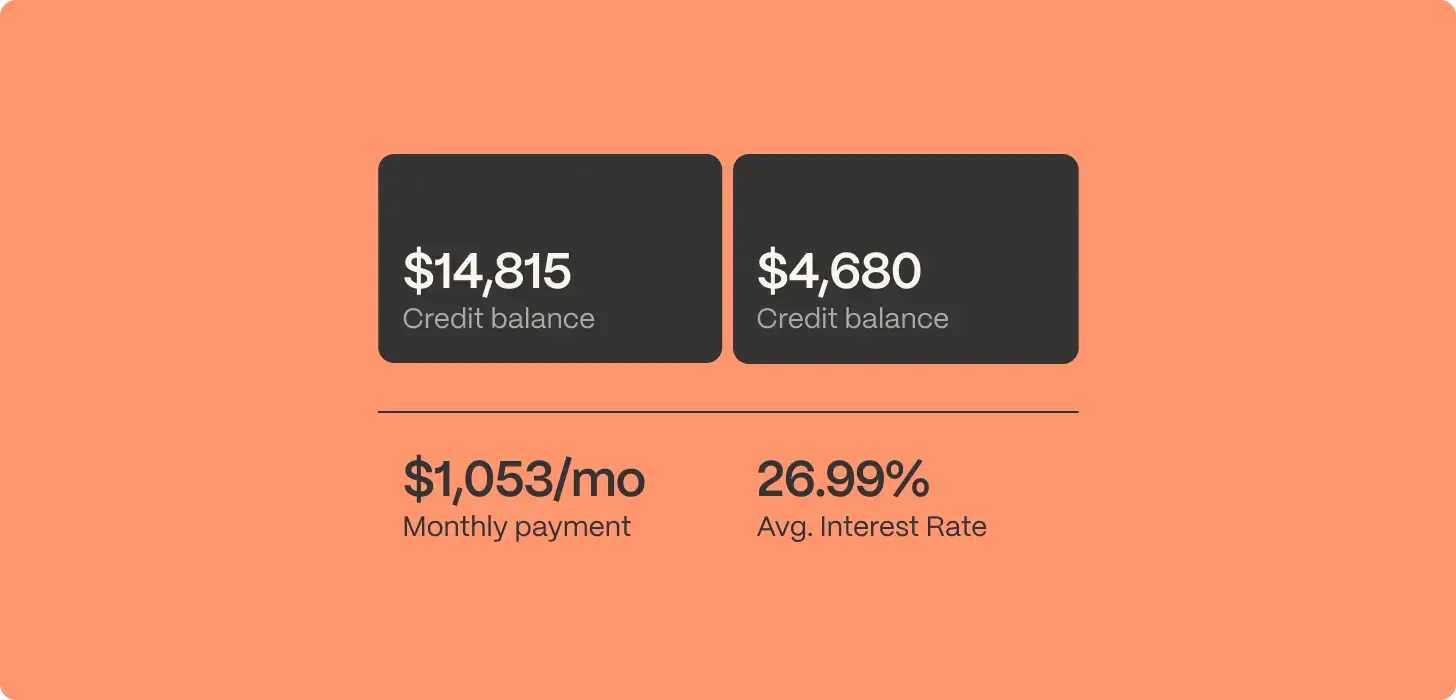
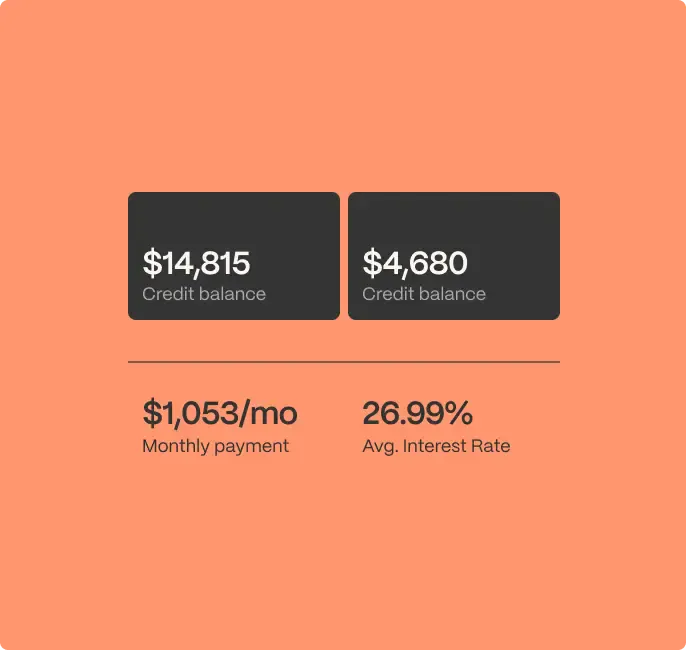
- Multiple high-rate balances with manageable total debt. If you're paying 20–28% on several credit cards and you can qualify for a personal loan at a meaningfully lower rate, the interest savings are real, and the repayment structure becomes simpler.
- Stable, documented income that supports the new payment. Consolidation requires a payment you can sustain for the entire loan term. If your income is reliable and the monthly payment fits your budget without strain, consolidation can work well. Tight cash flow that relies on a best-case scenario is a risk.
- Credit score in a range that allows a competitive rate. The interest savings case depends on qualifying for a rate lower than your current blended rate. Personal loan options for consolidation are available across credit profiles.
- Commitment to not reloading cleared cards. Paid-off cards become available credit, and available credit is only useful if you leave it alone
When Debt Consolidation May Not Be a Good Idea
Consolidation is not the right move in every situation. These are the cases where it is likely to make things worse rather than better:
- The available rate isn't lower than what you're currently paying. If your current blended rate is 15% and the best rate you can qualify for is 18%, there are no interest savings — only additional fees and a reorganized payment.
- The debt is already low-rate. Consolidating a 0% promotional balance, a low-rate auto loan, or subsidized debt into a personal loan typically increases your effective rate.
- The total debt load significantly exceeds realistic repayment capacity. Consolidation restructures repayment; it doesn't reduce the amount owed. If debt is simply too large relative to income, reorganizing the terms doesn't solve the underlying problem.
- Instability in income or employment. A multi-year fixed payment requires consistent income. If employment is uncertain or income is highly variable, committing to a fixed obligation over several years carries real risk.
Alternatives to Debt Consolidation
Consolidation is not the only path out of debt. Depending on your situation, one of these alternatives might serve you better:
Debt Avalanche Method
Managing four or five minimum payments across different accounts creates real cognitive overhead and increases the chance of a missed payment. Consolidation reduces that to one payment on one account. It's easier to track, easier to automate, and harder to miss.
Debt Snowball Method
Same principle as the avalanche, different starting point. Extra payments go toward the smallest balance first, regardless of the rate. Clearing a full account feels like progress in a way that shaving interest never quite does. That feeling matters more than people admit. The math is slower, but the motivation tends to last longer.
Balance Transfer Cards
You move your credit card balances onto a card that charges zero interest for an introductory period, usually somewhere between 12 and 21 months. No origination fees, no new debt. What you need is a decent credit score to qualify and a realistic plan to clear the balance before the clock runs out. Miss that window, and the rate that follows can be punishing.
Nonprofit Credit Counseling
NFCC-member agencies work directly with your creditors to negotiate lower interest rates and build a repayment plan that actually fits your budget. You make one monthly payment to the agency, and they handle the distribution. The cost is minimal or nothing at all. If you are not sure which direction to go, this is the conversation worth having first.
Final Thoughts
Debt consolidation is worth pursuing when the rate works, the income is steady, and you have a clear plan for the cleared credit accounts. Without those three things in place, you are not solving the problem. You are repackaging it. Before committing to anything, calculate what you are actually paying across all your debts right now, find out what rate you can realistically qualify for, and run the full numbers, including fees. That calculation tells you everything you need to know.
Frequently Asked Questions
Are debt consolidation loans a good idea?
They can be — when the consolidation rate is meaningfully lower than your current blended rate, your income supports the payment, and you have a plan for the cleared credit accounts. They're less useful when the available rate isn't competitive, the fees eat up the savings, or the debt level genuinely exceeds realistic repayment capacity.
What are the pros and cons of debt consolidation?
The main advantages are simplified repayment, potentially lower interest rates, and a fixed end date. The main disadvantages are origination fees, the risk of a longer repayment term that increases total interest, qualification requirements that not everyone meets, and the possibility of accumulating new debt on cleared accounts.
What are the risks of debt consolidation?
The primary financial risk is paying more in total interest if the loan term is extended, even at a lower rate. The behavioral risk is treating cleared credit card balances as available spending capacity and adding new debt on top of the consolidation loan. There's also the risk of paying fees for a consolidation that doesn't actually save money.
What are the drawbacks of a debt consolidation loan?
Origination fees (1–8% of the loan amount) add to the total cost. Qualification requires a credit profile and income level that support approval at a rate that makes consolidation worthwhile. Longer repayment terms reduce the monthly payment but increase total interest paid.
Share
Ready to move forward?Get started
Get loan offers in as little as 60 seconds
You deserve options. So we built an industry leading platform to compete for your business.

Loans up to $250,000
APR starting at 5.99%
Repayment terms up to 10 years
Your info is never sold